Chimney Cleaning in the Auburn Foothills
Local Context
The Auburn foothills — Auburn itself, along with Loomis, Penryn, and Newcastle — sit where the valley gives way to the Sierra, and the homes reflect it. Many are on larger, wooded lots, a good number are custom-built, and wood stoves and inserts are common alongside open fireplaces. At this elevation the nights turn cool early and stay cool late, so the burning season is longer here than down on the valley floor.
That means fireplaces get real use. A foothill home that burns for warmth through a long, cool season lays down creosote steadily, and the flues here tend to work harder than those in a valley house lit for the occasional cozy evening.
The setting adds its own demands. These homes sit right up against the trees, and pines and oaks drop needles, leaves, and dry duff onto roofs and around chimneys through much of the year. That debris is part of the picture up here in a way it simply is not down the hill.
Between hard-used flues and tree-covered roofs, an annual pre-season cleaning is the sensible foundation of owning a foothill fireplace.
How We Help the Auburn Foothills Homes & Businesses
Sierra Vista Maintenance handles chimney cleaning for wood-burning and gas/wood combination fireplaces and stoves across Auburn, Loomis, Penryn, and Newcastle, brushing the flue and firebox clear of soot and creosote and vacuuming out the ash. A gas-only fireplace has nothing to sweep, so you can set it aside. We are cleaners rather than masons: we do not do certified inspections or repair caps, crowns, liners, or dampers, but we check them, photograph anything worn, and refer you on — and we hold off on wet or icy foothill roofs until conditions are safe.
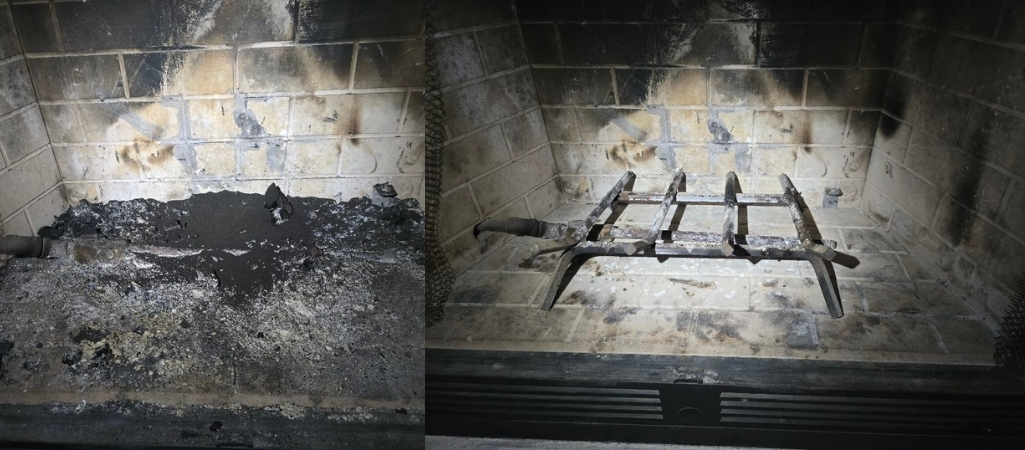
Every visit is contained. We seal the firebox, lay drop cloths, and keep an ash vacuum running the whole time so the soot stays in the fireplace. After a look with a light and mirror, a rotary brush sized to the flue works the creosote loose from the top down; then we clean out the fireplace, vacuum the hearth, and send before-and-after photos the same day.
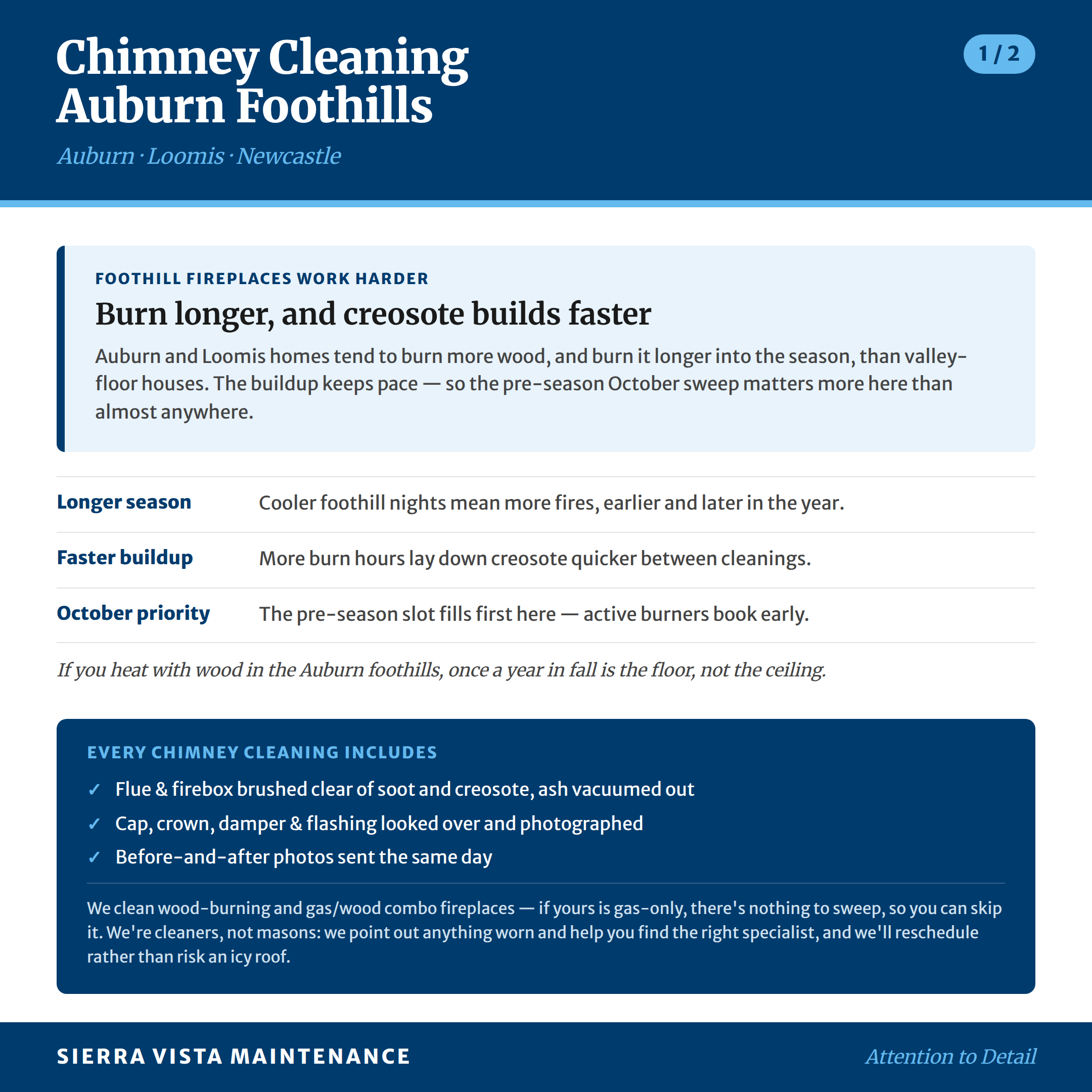
Because foothill fireplaces tend to burn hard, our chimney cleaning services usually center on a thorough pre-season sweep in early fall, with a mid-season check worthwhile for the heaviest burners. The pre-season slots fill first up here, so booking early is wise.
Because these are larger, wooded properties, we plan the visit accordingly — more roof to cover, more trees overhead, and often a wood stove or insert as well as an open hearth. A complete chimney and fireplace cleaning here means clearing the flue, the connector pipe on any stove, the firebox, and the debris the trees have left around the crown, then handing you photos of all of it. Booking the pre-season slot early is the surest way to have it done before the weather turns the roofs unsafe.
Wood stoves and inserts are common in these homes, and they get the same careful chimney and fireplace cleaning as an open hearth — connector pipe and flue included. Whatever you burn in, the goal of our chimney cleaning service is a flue that draws cleanly and a fireplace that is safe to run. You can also read more about our chimney cleaning services across Greater Sacramento.
What Makes Chimney Cleaning in the Auburn Foothills Different
What makes chimney cleaning in the Auburn foothills distinctive starts with the homes. Many sit on larger, wooded lots and were custom-built for the setting, and wood heat here is often a serious feature rather than an afterthought — open masonry fireplaces, yes, but also a high number of wood stoves and inserts installed to warm real square footage through a long, cool season.
That housing pattern shapes the work. A stove or insert that heats a home all winter burns far more wood than an occasional fireplace, and its flue and connector pipe carry a correspondingly heavier creosote load. A proper chimney sweep here means cleaning the whole system thoroughly, not just glancing at an open firebox, and knowing that these appliances are worked hard enough to reward regular attention.
The larger foothill lots matter too. More roof, more surrounding trees, and more chimney to reach all make the visit a bit more involved than a compact valley home, and the mix of masonry and metal-lined appliances means matching the brush and method to each. Reading the home correctly — its appliances, its use, its setting — is what good chimney cleaning in the Auburn foothills comes down to.
Common Chimney Cleaning Issues We See in the Auburn Foothills
Heavier Creosote From Hard Use
Foothill homes burn more wood, over a longer season, than valley houses, and their flues show it. A thorough chimney sweep each fall keeps that heavier creosote from hardening into a glazed layer that is far tougher and more dangerous to remove.
Needles and Duff Around the Crown
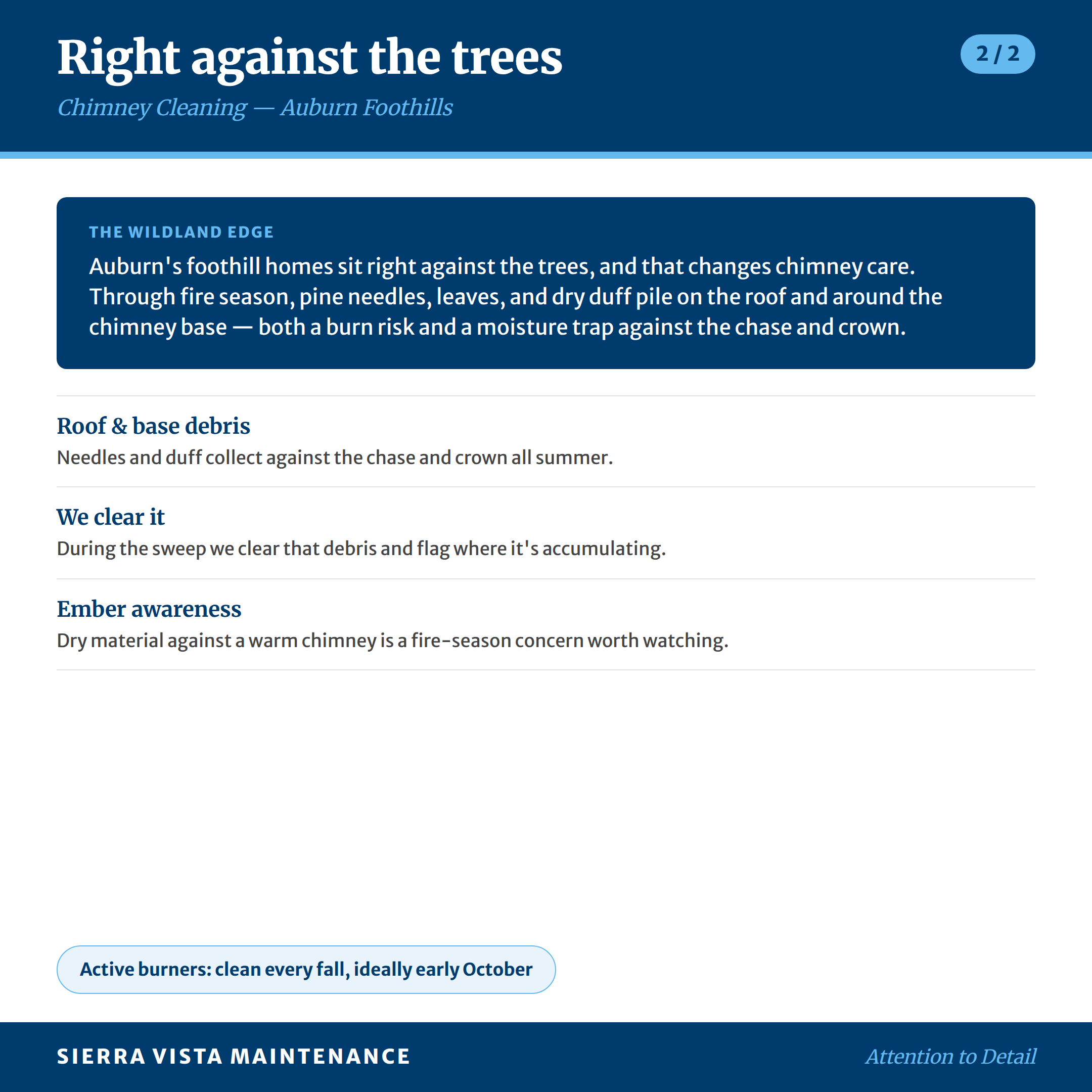
The pines and oaks that shade these wooded lots drop steadily onto the roof, and that debris packs in around the chimney chase and crown. Left there it traps moisture against the masonry; in fire season it is also an ember concern. We clear it as part of the visit.
Wood Stoves and Inserts
Many Auburn-area homes heat with a stove or insert, which needs its connector pipe and flue cleaned along with the firebox. We handle these as part of our chimney cleaning services, since a hardworking stove is exactly the appliance you do not want neglected.
Idle-Season Nesting
Even hard-used foothill flues sit quiet through the warm months, and a cracked cap invites birds and squirrels in. Part of why we clean out the fireplace before the first fall fire is to be sure nothing has moved in over the summer.
Right Against the Trees: The Wildland Edge in Auburn
The single most distinctive thing about chimney care in the Auburn foothills is where these homes sit: right up against the trees. Pines and oaks lean over the rooflines, and through much of the year they shed needles, leaves, and dry duff onto the roof and down around the chimney chase and crown. That accumulation is not just untidy — it does two specific kinds of harm.
First, packed debris holds moisture against the masonry. A crown or a set of mortar joints that would shed rain cleanly instead stays damp under a mat of wet needles, and over the seasons that trapped moisture works at the structure. Second, and more pressing in this landscape, a pile of dry needles against a chimney that has been throwing heat all evening is a genuine ember concern during fire season.
So a chimney sweep in Auburn is partly about the flue and partly about its surroundings. While we clean the creosote from inside, we also clear the debris that has collected around the base and crown and flag anywhere it keeps building up, so you know where the roof needs attention between visits.
For homes on the wildland edge, that outside-and-in approach is the whole point. Keeping the flue clean protects against a chimney fire; keeping the crown and roofline clear protects against moisture and against embers finding fuel right where you least want it. In this setting, the two go together, and a good annual cleaning handles both.
It also shapes how we think about timing. The same tree cover that drops needles onto the roof makes those roofs slick and hazardous once the rains arrive, so the window for safe, thorough work up here is narrower than it looks. Getting the cleaning and the debris-clearing done in early fall — before the wet season and before the heaviest burning — is the practical way to protect both the flue and the roofline while conditions still allow it.
For families who chose the foothills partly for the woodsmoke-and-fireplace life, that is less a chore than the natural rhythm of the place: a single well-timed visit that lets you enjoy the fires without second-guessing the chimney behind them. That peace of mind, more than anything, is what a well-timed foothill sweep really buys you — the freedom to light a fire on the first cold night without a second thought.
the Auburn Foothills Chimney Cleaning FAQs
Do foothill homes really need more frequent chimney cleaning?
Often, yes. Auburn-area fireplaces and stoves tend to burn harder and over a longer season than valley homes, which lays down creosote faster. A thorough fall sweep is the baseline, and the heaviest burners benefit from a mid-season check as well.
Is the debris from my trees actually a problem for my chimney?
It can be. Needles and duff packed around the crown trap moisture against the masonry, and in fire season a dry pile against a warm chimney is an ember concern. We clear what has collected around the chimney and flag where it keeps building up.
Do you clean wood stoves and inserts?
Yes. Stoves and inserts are common in foothill homes, and we clean them thoroughly, connector pipe and flue included, the same way we would an open masonry fireplace. If it burns wood, it builds creosote and needs sweeping.
When is the best time to schedule my Auburn chimney cleaning?
Early fall, before the season starts and before wet or icy roofs make the work unsafe. The pre-season slots fill first up here, so booking ahead is the surest way to be ready for the first fire.
Can you repair a cracked crown or damaged cap?
No — we are cleaners, not masons. We do not repair crowns, caps, liners, or dampers. We do inspect them on every visit, photograph anything worn, and explain what we see so you can bring in the right specialist.
Request an Estimate
In most cases, we deliver same-day or next-day quotes after we speak with you on the phone or after you complete an estimate request online.