Chimney Cleaning in Arden-Arcade and Carmichael
Local Context
Arden-Arcade and Carmichael are two of Sacramento County’s most established residential areas, and their housing tells the story. Neighborhoods like Arden Park, Sierra Oaks, Del Paso Manor, and the larger lots of Carmichael along the American River were mostly built out between the 1950s and the 1970s, when a wood-burning fireplace was a standard feature rather than a luxury. Decades later, most of those original masonry fireplaces are still in place and still in use.
The local climate keeps them working. Winters here are cool and damp, with a burning season that runs from roughly November through February, while long, dry summers leave chimneys sitting unused for months at a time. That stop-start rhythm is exactly what makes annual chimney cleaning worthwhile: a season of fires lays down creosote, and the off-season invites birds, squirrels, and debris into a flue nobody is watching. By late fall, that first fire of the year is often the moment a homeowner discovers a problem an earlier visit would have caught.
Mature tree cover adds to it. The deodar cedars, valley oaks, and tall pines that shade these older streets are part of what makes Arden-Arcade and Carmichael pleasant to live in, but they also drop needles and leaves onto roofs and around chimney crowns all year. Combined with aging masonry, that setting is why chimney and fireplace cleaning here is less a one-time job than a regular part of owning one of these homes.
Whether you burn most nights through the winter or light a fire only for the holidays, a fireplace that has been in service for half a century deserves an annual look before the first cold snap.
How We Help Arden-Arcade and Carmichael Homes & Businesses
Sierra Vista Maintenance handles chimney cleaning for wood-burning and gas/wood combination fireplaces — masonry, factory-built, and zero-clearance units alike — brushing the flue and firebox clear of soot and creosote and vacuuming out the ash. If your fireplace runs on gas alone, there is nothing to sweep, so that is one you can comfortably skip. We stick to what we do well: we do not perform certified inspections or repair caps, crowns, liners, or dampers, but we look them over on every visit, photograph anything worn, and point you toward the right specialist. And if the roof is icy or wet, we reschedule for a safer day rather than take chances up there.
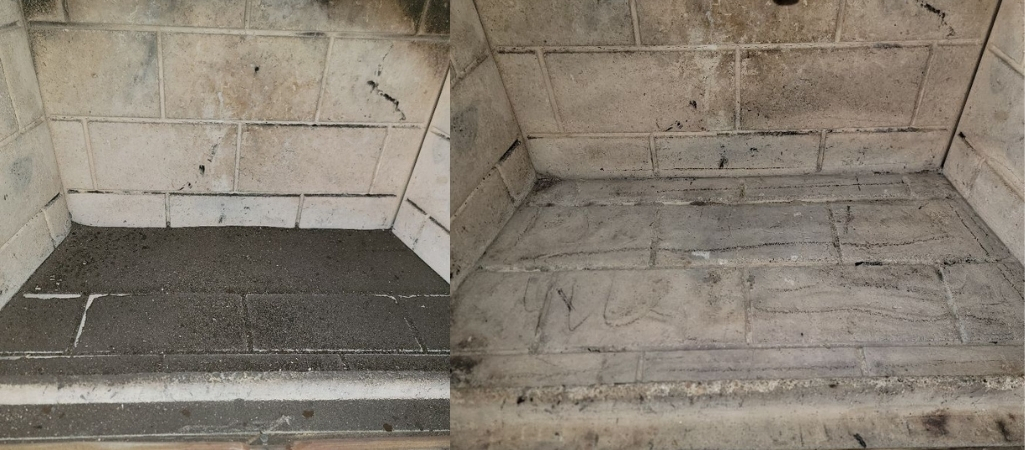
A standard visit is quick and contained. We lay down drop cloths, seal the firebox opening, and keep an ash vacuum running the whole time so the soot stays in the fireplace and off your floors. After a look with a light and mirror, we run a rotary brush sized to your flue — steel for masonry, softer poly for metal liners — working the creosote loose from the top down. Then we clean out the fireplace, vacuum the hearth, and send before-and-after photos the same day.
That combination of chimney and fireplace cleaning is the core of what we do, and for most Arden-Arcade and Carmichael homes a single pre-season visit each fall is enough. Homes that burn wood as real heat through the winter benefit from a mid-season check as well. Either way, our chimney cleaning services follow the same standard: inspect first, sweep thoroughly, leave no mess, and tell you plainly what we find.
Older masonry and newer factory-built fireboxes get slightly different handling. A full chimney sweep on a decades-old masonry flue means watching for glazed, hardened creosote and cracked flue tiles as we go; a factory-built unit means lighter brushing and care around the metal liner connections. Whichever you have, the goal of our chimney cleaning service is the same: a flue that draws cleanly and a fireplace that is safe to light.
If you want the broader picture first, you can read more about our chimney cleaning services across the Greater Sacramento area.

What Makes Chimney Cleaning in Arden-Arcade and Carmichael Different
What sets chimney cleaning in Arden-Arcade and Carmichael apart is the age of the housing. These are largely mid-century neighborhoods, and the fireplaces are original to homes built when full masonry was the norm — single-flue brick chimneys designed to be burned in regularly, not the sealed factory-built inserts you find in newer subdivisions.
That era of construction changes how a chimney sweep approaches the work. Fifty- and sixty-year-old flues have seen thousands of fires, and the creosote they carry is often older and more stubborn than what builds up in a lightly used modern firebox. The clay flue tiles that line them can crack quietly over the decades, and the mortar between them softens with age. None of that is unusual for a home of this vintage, but it does mean we look more carefully as we clean. We would rather find a cracked tile or a soft mortar joint on a routine visit than have you discover it the hard way when the fireplace starts to smoke.
It also means these fireplaces reward consistency. A home that has kept up with annual chimney cleaning stays at the easy end of the spectrum, where creosote is still soft and a routine sweep handles it. A fireplace that has gone years between cleanings is where the hardened, glazed buildup and hidden masonry wear tend to show up. For the established homes of Arden-Arcade and Carmichael, keeping to a yearly rhythm is the difference between a simple visit and a complicated one.
Common Chimney Cleaning Issues We See in Arden-Arcade and Carmichael
Heavy, Glazed Creosote in Older Flues
The most common thing we find during a chimney sweep in these neighborhoods is creosote that has been left to build over several seasons. In a flue that gets swept every year it stays soft and brushes away; left longer, it hardens into a glazed layer that is far tougher to remove and far more likely to catch fire. Annual fireplace cleaning is what keeps it from ever reaching that stage.
Cracked or Missing Chimney Caps
Many original Arden-Arcade and Carmichael chimneys still wear their first cap, or have lost it entirely. A cracked or missing cap lets rain, leaves, and animals straight into the flue. We check the cap on every visit and flag anything broken so you can have it replaced before it becomes a bigger problem.
Nesting Birds and Squirrels
An uncapped or damaged flue is an open invitation during the long off-season. It is not unusual to open up a chimney in the fall and find a nest built over the summer. Part of the reason to clean out the fireplace before the first fire is simply to be sure nothing has moved in while you weren’t looking.
Rusted Dampers and Draft Problems
Decades of moisture take a toll on metal dampers, and a damper that will not seat or open properly makes a fireplace smoke and draft poorly. We note these during our chimney cleaning services and tell you what a repair would involve, even though the fix itself is a job for a fireplace specialist rather than a cleaner.
Winter Rain, Cracked Crowns, and Worn Mortar in Arden-Arcade and Carmichael
For the original masonry chimneys that define these neighborhoods, the biggest long-term threat often is not creosote at all — it is water. The crown, the sloped cement slab at the very top of the chimney, is the first thing to go. After decades of Sacramento sun and winter rain it cracks, and once it does, water runs straight down into the masonry instead of shedding off the sides.
The mortar joints are the second weak point. Sixty years of weather opens hairline gaps between the bricks, and those gaps wick moisture into the structure. When a wet winter follows a dry summer, that trapped water expands and contracts with the temperature and slowly works the brick and mortar apart — the same freeze-thaw pattern that spalls the face off old chimneys one flake at a time.
We can’t repair any of that, and we don’t pretend to. What we do is catch it early. While we clean out the fireplace and sweep the flue, we are also looking at the crown, the mortar, and the flashing, and we photograph anything cracked, worn, or letting water in. You get those photos the same day, along with a plain explanation of what they show, so you can bring in a mason before a small crack becomes a rebuilt chimney. For homes this established, that early warning is one of the most useful parts of routine chimney cleaning.
Do I still need a chimney sweep if I only light a few fires each winter?
Yes. Even a handful of fires a season leaves creosote on the flue walls, and a chimney that sits unused for months is exactly where birds, squirrels, and debris tend to settle in. An annual sweep before the first fire is worthwhile whether you burn nightly or only over the holidays.
My chimney has a cap — does it still need cleaning?
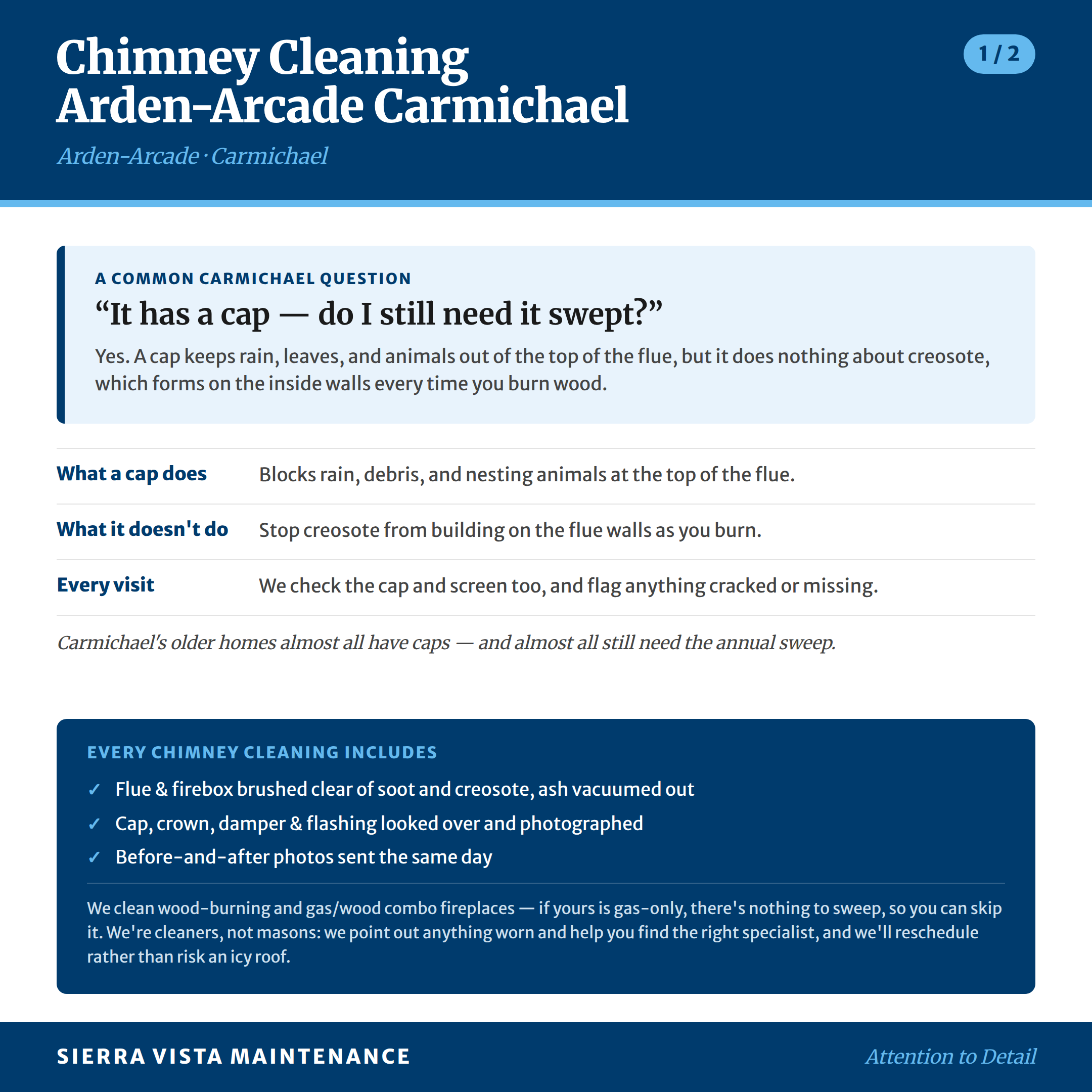
It does. A cap keeps rain, leaves, and animals out of the top of the flue, but it does nothing about the creosote that forms on the inside walls every time you burn wood. The cap is a good thing to have, and we check it on every visit, but it is not a substitute for sweeping.
How do I know if my fireplace is wood-burning or gas?
If you burn real logs — even with a gas starter to get them going — it is a wood-burning fireplace and builds creosote, so it needs cleaning. If it runs on gas alone with ceramic logs and no wood, there is nothing to sweep. If you are not sure, tell us how you light it and what you burn and we will sort it out.
How often should I schedule chimney cleaning in Arden-Arcade or Carmichael?
For most homes here, once a year is the right rhythm: a pre-season cleaning in the fall clears the previous winter’s creosote before you light up again. Homes that burn wood as a primary heat source through the winter often benefit from a mid-season check as well.
Can you repair a cracked crown or fix the masonry on my chimney?
No — we are cleaners, not masons. We do not repair crowns, mortar, liners, or dampers. What we do is spot those problems while we clean, photograph them, and explain what we are seeing so you can bring in the right specialist before the damage spreads.
Request an Estimate
In most cases, we deliver same-day or next-day quotes after we speak with you on the phone or after you complete an estimate request online.