Chimney Cleaning in North Sacramento
Local Context
North Sacramento covers practical, established communities — North Highlands, Rio Linda, and Elverta among them — where the homes tend to be older, modest, and built for everyday living rather than show. A great many of them have wood-burning fireplaces, and out toward Rio Linda and Elverta, where lots open up into semi-rural acreage, wood is often a genuine heat source rather than an occasional comfort.
That mix gives the area two kinds of fireplace. Closer in, older tract homes have practical masonry or factory-built fireboxes lit through the cool, damp winters. Out on the acreage, fireplaces and stoves get burned harder and more regularly for warmth, which lays down creosote at a steadier pace.
The seasons follow the familiar valley pattern: fireplaces work from late fall into spring, then sit idle through a long, hot summer that leaves flues open to leaf litter and the occasional nesting bird. Whether a home burns nightly or now and then, the chimney collects creosote in winter and debris in the off-season.
For these hardworking, well-used fireplaces, a straightforward annual cleaning before the first cold-weather fire is simply sensible upkeep.
How We Help North Sacramento Homes & Businesses
Sierra Vista Maintenance provides chimney cleaning for wood-burning and gas/wood combination fireplaces across North Sacramento, North Highlands, Rio Linda, and Elverta, brushing the flue and firebox clear of soot and creosote and vacuuming out the ash. If your fireplace is gas-only, there is nothing to sweep. We are cleaners rather than masons: no certified inspections and no repairs to caps, crowns, liners, or dampers, but we check them, photograph anything worn, and refer you on. Wet or icy roofs wait for a safer day.
Every visit stays contained. We seal the firebox, put down drop cloths, and run an ash vacuum throughout so the soot never reaches your floors. After a look with a light and mirror, a rotary brush sized to the flue lifts the creosote from the top down, and then we clean out the fireplace, vacuum the hearth, and text or email before-and-after photos the same day.
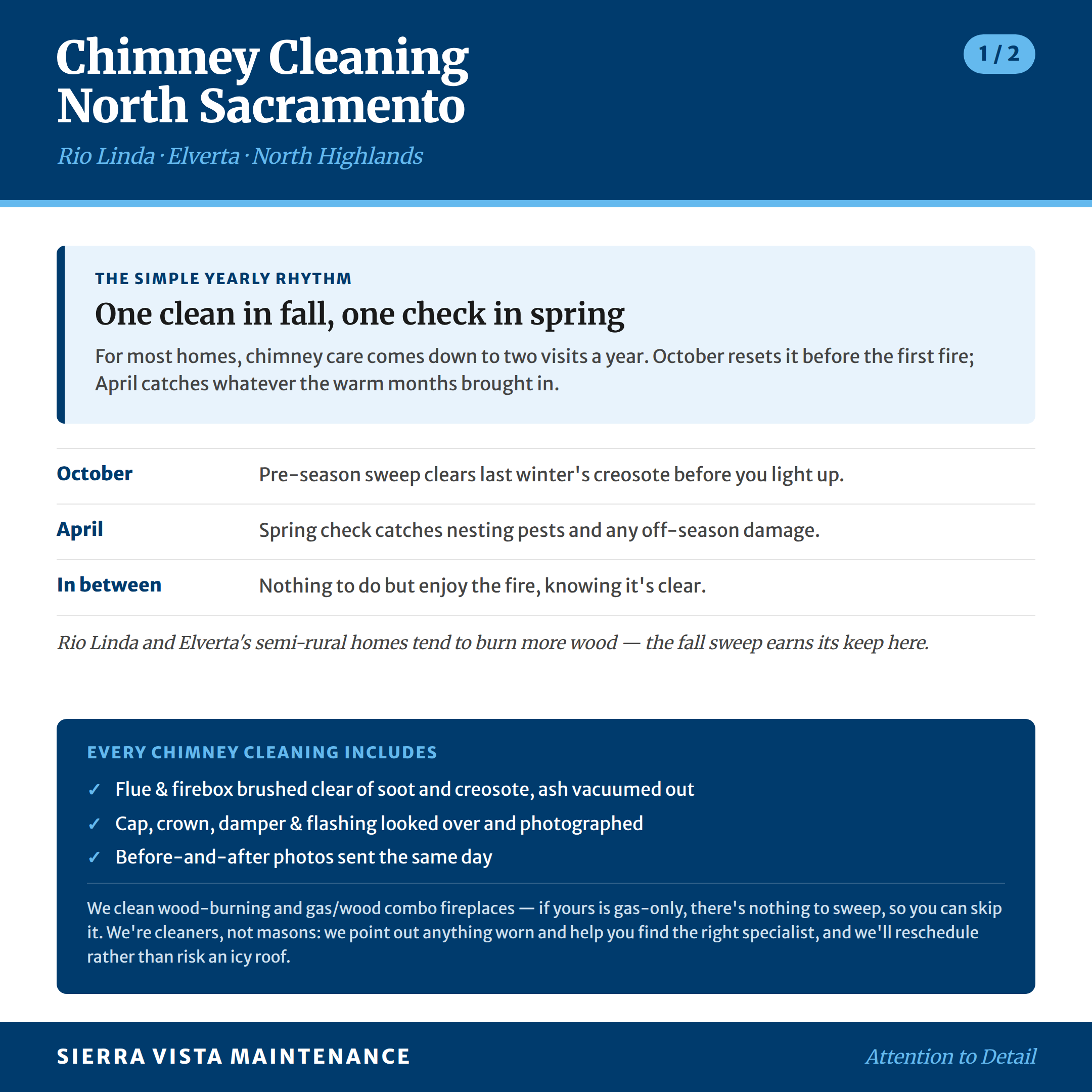
For most North Sacramento homes, a single pre-season chimney sweep each fall handles it, with a quick spring check a good idea for the harder-burning fireplaces out on the acreage. Our chimney cleaning services run the same way every time — inspect first, sweep thoroughly, leave no mess, and tell you plainly what we found. There is no upsell here, just the cleaning your fireplace actually needs.
Scheduling is easy and we keep it low-key. We work these neighborhoods regularly, so booking a convenient window is rarely a problem, and there is no pressure to buy more than the fireplace needs. Most homeowners here book the fall cleaning and, for a rural stove that runs all winter, add a spring check to catch anything the season left behind. If a modest in-town firebox is fine with a single annual sweep, that is exactly what we will tell you, and we will show you the before-and-after photos to back it up.
Older masonry fireboxes and newer factory-built units get slightly different handling, and wood stoves out in the rural areas get the same thorough chimney and fireplace cleaning as an open hearth. Whatever you have, the aim of our chimney cleaning service is the same: a flue that draws cleanly and a fireplace that is safe to light. You can also read more about our chimney cleaning services across the region.

What Makes Chimney Cleaning in North Sacramento Different
What makes chimney cleaning in North Sacramento distinctive is the housing itself. These are older, practical neighborhoods, and the fireplaces are mostly original to homes built decades ago — workaday masonry and factory-built fireboxes that have seen a lot of fires and were never fussy showpieces to begin with.
That age is worth respecting when we clean. A firebox that has burned for thirty or forty years may carry heavier, older creosote and can hide a cracked flue tile or a rusting damper that never shows from the living room. None of that is unusual for homes of this vintage, but it does mean a good chimney sweep looks a little closer rather than assuming a modest fireplace is a simple one.
The semi-rural edge of the area adds another layer. Out in Rio Linda and Elverta, older homes on larger lots often burn wood in earnest, so their flues work harder than an in-town fireplace lit for the holidays. Serving the whole area means matching the cleaning to the home — the routine sweep an occasional-use firebox needs, and the closer, more frequent attention a hardworking rural chimney earns.
Common Chimney Cleaning Issues We See in North Sacramento
Heavier Creosote in Well-Used Flues
The wood-heat homes out toward Rio Linda and Elverta burn regularly, and their flues carry heavier creosote than an occasionally lit fireplace. Annual fireplace cleaning keeps it from hardening into the glazed, stubborn stage that is far tougher and riskier to remove.
Aging Fireboxes and Flues
The area’s older masonry fireplaces can develop cracked flue tiles and worn mortar over the decades, none of it visible from inside the house. We check for it with a light and mirror during every chimney sweep and photograph anything we find so you can plan a repair.
Rusted Dampers and Draft Problems
Decades of moisture take a toll on metal dampers, and one that will not seat or open properly makes a fireplace smoke and draft poorly. We note these during our chimney cleaning services and explain what a repair would involve, though the fix is a job for a specialist.
Off-Season Nesting
A flue that sits idle through the long, hot summer is an easy target for birds and squirrels, especially where a cap has cracked. Part of why we clean out the fireplace before the first fall fire is to confirm nothing has settled in over the warm months.
Hardworking Fireplaces on North Sacramento’s Rural Edge
The thing to understand about North Sacramento chimneys is that many of them work for a living. Out on the semi-rural lots of Rio Linda and Elverta, a fireplace or wood stove is often a real part of how the house stays warm through the winter — not a decorative touch lit twice a year, but a heat source burned steadily for months.
That changes what the chimney needs. A fireplace burned for genuine warmth lays down creosote at a much faster clip than one lit for ambiance, and the flues on these hardworking rural chimneys tend to show it. Where an in-town holiday fireplace does fine with a routine annual sweep, a wood-heat home benefits from a closer eye and, in a hard winter, a mid-season check to keep the buildup from getting ahead of things.
Wood stoves and inserts are common out here too, and they carry their own maintenance needs, from the connector pipe to the flue. We clean them the same thorough way we would an open hearth, because a hardworking stove that heats the house all winter is exactly the kind of appliance you do not want neglected.
The through-line for the whole area is honesty about use. A modest in-town fireplace and a hard-burning rural stove are different jobs, and we match the cleaning — and our advice on how often you need it — to how the fireplace is actually lived with. For North Sacramento’s practical, well-used chimneys, that plain, right-sized approach is exactly what good chimney cleaning should be.
There is also a practical, budget-minded logic to staying on schedule that fits these neighborhoods well. A routine annual sweep is a small, predictable expense; a flue left until creosote hardens into a glazed layer, or until a hidden crack lets heat where it should not go, is a far larger and less pleasant one. For practical homeowners who would rather head off a problem than pay to fix it, the yearly cleaning is simply the cheaper, calmer path. Year after year, that steady rhythm is what keeps these older, hardworking chimneys dependable through every cold snap — the kind of quiet, sensible maintenance these neighborhoods have always done well, and we are glad to handle it each fall.
My fireplace gets a lot of use for heat — how often should it be cleaned?
A fireplace or stove burned regularly for warmth builds creosote faster than one lit occasionally, so once a year before the season plus a mid-winter check is often the right rhythm. We will tell you how heavy the buildup was so you can judge your own cadence.
Do you clean wood stoves and inserts?
Yes. Wood stoves and inserts are common on the rural edge of the area, and we clean them thoroughly, connector pipe and flue included, just as we would an open masonry fireplace.
My home is older — could the chimney have hidden damage?
It is possible. Older masonry flues can develop cracked tiles or worn mortar that never show from inside the house. We check with a light and mirror during every sweep and photograph anything we find so you can plan a repair with a mason.
How often should I schedule chimney cleaning in North Highlands or Rio Linda?
Once a year suits most homes: a pre-season sweep in the fall clears the previous winter’s creosote before you light up again, with a spring check a good idea for the harder-burning rural fireplaces.
Can you repair a cracked flue or damaged damper?
No — we clean rather than repair. We do not fix flue tiles, dampers, caps, or crowns. We do find these problems during the sweep, photograph them, and point you to the right specialist before they get worse.
Request an Estimate
In most cases, we deliver same-day or next-day quotes after we speak with you on the phone or after you complete an estimate request online.