Solar Panel Cleaning in Arden-Arcade & Carmichael
Local Context
Arden-Arcade and Carmichael are two of Sacramento’s oldest established suburbs, filled in through the 1950s and ’60s as the region spread east from downtown along the American River. Decades on, they’re defined by mature trees, settled neighborhoods, and — increasingly — rooftops that went solar early.
They sit in the thermal heart of Sacramento County, between downtown and the foothills. That central position means the full valley summer: hot, and dry from June through September, with no coastal or Delta breeze to speak of and no rain to rinse a roof for months at a stretch.
The housing skews older here, from ranch homes near Arden Fair to larger wooded lots along the river in Carmichael. Many of these homes were among the first in the area to add solar, which means a lot of local arrays have been generating — and collecting dust — for ten years or more.
Whether your panels went up last year or a decade ago, that mix of long dry summers and established, tree-dotted neighborhoods is what makes regular cleaning worth booking here.
How We Help Arden-Arcade & Carmichael Homes & Businesses
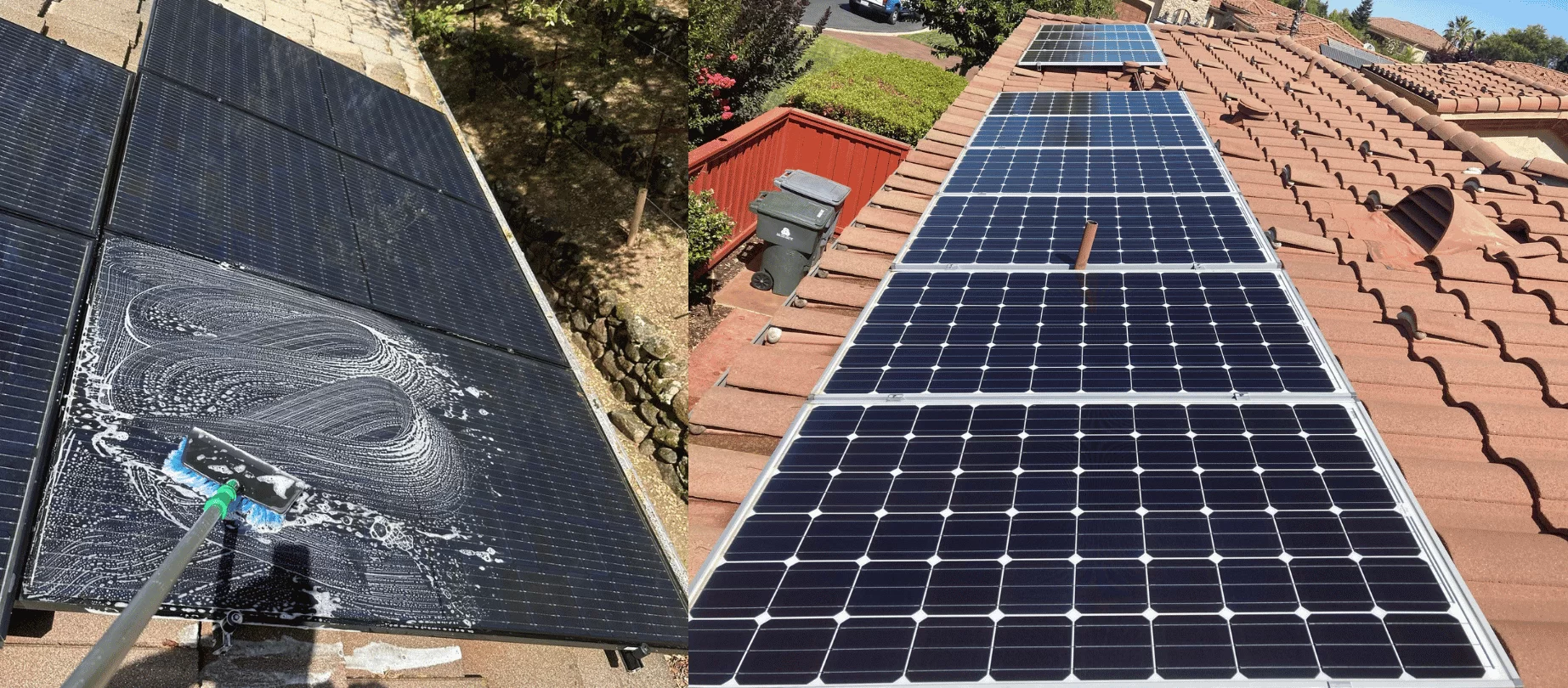
A good share of the solar in Arden-Arcade and Carmichael has been on the roof for years, and cleaning long-established arrays is squarely what we do. We work with pure, deionized water and soft brushes on extension poles. Deionizing strips the minerals out of the water, so it can lift years of accumulated film off the glass and then dry clean — no spotting, no soap, nothing left behind to grab the next layer of dust.
The bulk of our local work is residential. Our residential solar panel cleaning handles rooftop arrays across Arden-Arcade and Carmichael, and on older systems the first thorough cleaning often makes the clearest difference — years of buildup come off at once.
We also handle commercial solar panel cleaning on the offices, medical buildings, and multi-tenant properties along the Watt and Fair Oaks corridors. Same pure-water approach, scaled to the site.
We clean the glass and leave the electrical to your installer. On older arrays especially we keep an eye out — a lifting clamp, a worn seal, bird or squirrel debris packed under the panels — and we’ll point out anything that looks like it needs a specialist.


What Makes Solar Panel Cleaning in Arden-Arcade & Carmichael Different
What shapes cleaning here is the plain fact of a central-valley summer with nowhere for the heat to go. Arden-Arcade and Carmichael sit in the middle of the county, too far from the Delta for the afternoon breeze that cools Elk Grove and too low for the foothill air that cools Auburn.
So rooftops bake. Dust and pollen that might blow off a cooler roof instead set into a hard film on hot glass, and from June through September there’s essentially no rain to break it up. A season’s worth of soiling accumulates and hardens with nothing to clear it.
There’s a second wrinkle unique to an older, established area: mature trees. Carmichael in particular holds a heavy canopy along the American River, so many local roofs get both the full summer heat and a steady drop of leaf litter and bird traffic from the branches above. An exposed array on an open Arden-Arcade lot and a shaded one under Carmichael oaks are on genuinely different cleaning clocks, and we treat them that way.
That’s why we ask how long an array has been up and how much shade it gets before setting a schedule — two roofs a block apart can genuinely need different attention.
Common Solar Panel Cleaning Issues We See in Arden-Arcade & Carmichael
Years of un-cleaned buildup
Many local systems have been up for a decade without a real cleaning. Film that accumulates that slowly is easy to stop noticing, but it quietly shaves output year after year — and it usually comes off in a single visit.
Leaf litter and bird traffic near the river
Homes under Carmichael’s river canopy collect leaves, catkins, and droppings on the panels. Through the dry summer, none of it rinses away on its own.
Baked-on summer dust
With no breeze and no rain for months, fine dust bakes into a haze on hot glass that a garden hose can’t cut — it takes pure water and a soft brush to clear without scratching the coating.
Shade from mature trees
Established lots often sit under tall trees, and a panel that’s both shaded and dirty loses more than one that’s only shaded — so clean glass matters more under a canopy, not less.
Arden-Arcade and Carmichael Went Solar Early — and It Shows on the Glass
These are established neighborhoods, and they were early to solar. Drive through Arden-Arcade or Carmichael and you’ll pass arrays that have been on the roof since the early 2010s — some longer. That head start is great for the power bill, but it changes what a cleaning is up against.
Soiling doesn’t arrive all at once; it layers. Ten summers of pollen, dust, and the occasional dropping build into a film a homeowner stops seeing because it came on so gradually. Meanwhile the panel keeps quietly losing a little output, and on a long-installed system that small loss has been compounding for years.
There’s age to account for, too. Older arrays are likelier to have a lifting clamp, a weathered seal, or debris packed underneath where roof meets rail — none of which we fix, but all of which we notice while we’re up there and flag for you.
The upshot is that a long-installed array often has the most to gain from a proper cleaning. Clearing a decade of gradual buildup in one visit tends to restore more than owners expect, getting a system that’s been working hard for years back closer to what it did on day one.
It’s common for a long-installed array to tick up noticeably on the monitoring app after its first real cleaning — the loss was simply too gradual to notice going on. Clearing a decade of buildup in one visit is the most satisfying result we see: the glass looks new, and the numbers follow.
How often should I clean my solar panels in Arden-Arcade or Carmichael?
Twice a year fits most rooftops here — once in late spring after the pollen drops, once in late summer. If your array has been up for years without a cleaning, a first catch-up visit usually matters most; from there, the long dry summer with no rain from June through September is the reason a steady rhythm pays off.
Will hard water spots come off my panels?
Hard water spotting is best prevented, not removed. Fresh spotting from sprinkler overspray rinses off with regular service, but spots left to bake on over several summers can etch the glass and become permanent — and Sierra Vista Maintenance does not perform mineral or acid removal treatments. The fix is staying ahead of it: regular cleaning and keeping sprinkler spray off the panels keep the minerals from ever setting in.
My panels have been up for years and never cleaned. Is that a problem?
Usually, yes. Soiling on a long-installed array builds so gradually that owners stop noticing it, while the panel keeps losing a bit of output the whole time. The first thorough cleaning lifts years of buildup at once and often restores more than people expect.
Do you clean commercial solar arrays in Arden-Arcade and Carmichael?
Yes. Along with homes, we clean the roof- and ground-mounted systems on offices, medical buildings, and multi-tenant properties along the Watt and Fair Oaks corridors. The pure-water method is the same; we adjust for the scale and roof access of a commercial site.
Why deionized water instead of a garden hose?
A hose sprays the same hard tap water your sprinklers do, and on hot glass those minerals dry into spots that scatter light and, over time, etch in. Deionized water has the minerals taken out, so it rinses the panel and dries invisibly — the difference between rinsing a glass with tap water and with distilled.
Request an Estimate
In most cases, we deliver same-day or next-day quotes after we speak with you on the phone or after you complete an estimate request online.