Pressure Washing in the Auburn Foothills
Local Context
The Auburn Foothills region climbs the I-80 corridor into the higher-elevation Sierra foothills east of Roseville: Auburn, Newcastle, Penryn, Loomis, Bowman, and Meadow Vista. Loomis is grouped here with the foothill towns rather than with Roseville, following the long-standing Penryn-Loomis-Newcastle cluster along the highway. Properties tend to be larger and more rural than the valley suburbs, many on wooded lots with mixed pine, cedar, and oak.
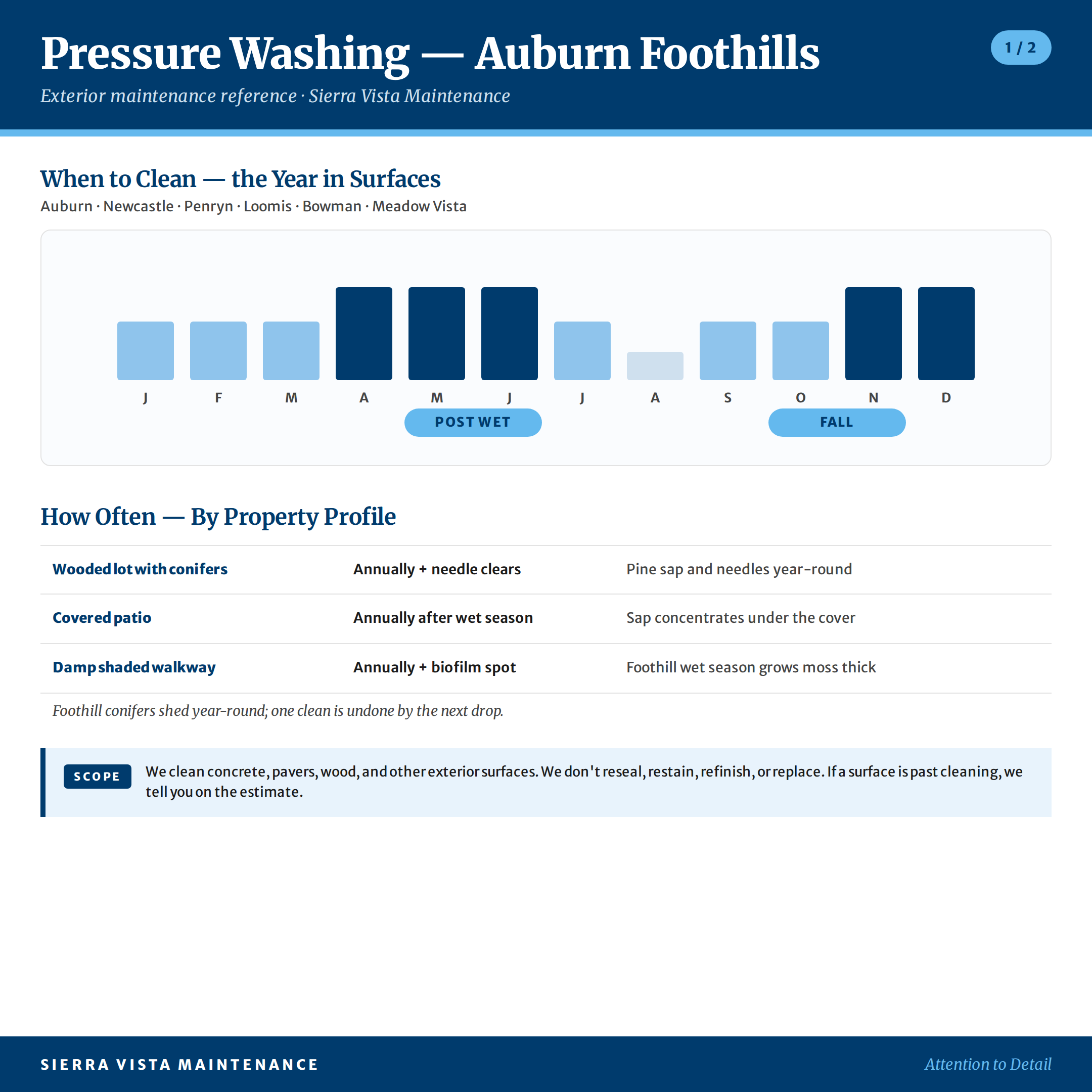
Elevation changes the weather. The foothills get more annual rainfall than the valley floor, a longer and wetter cool season, cooler shaded canyons, and occasionally a freeze — conditions that keep surfaces damp longer and feed more moss and organic growth than the open valley sees. Old Town Auburn’s older buildings and the wooded residential lots throughout the region share that damp, shaded character.
Foothill properties lean toward outdoor living — covered patios, walkways through wooded lots, and decks — all of it under conifers that shed year-round. Pressure washing (sometimes called power washing locally), patio cleaning, and fence, deck, and trash-can cleaning are commonly quoted together across the foothill towns.
How We Help Auburn Foothills Homes & Businesses
Sierra Vista Maintenance cleans concrete, pavers, wood, and other exterior surfaces using pressure washing and soft-washing techniques. We do not repair, reseal, restain, or replace the surfaces we clean. If your concrete is spalled, your pavers are heaving, or your deck wood needs refinishing, we’ll tell you on the estimate so you can address the underlying issue with the right contractor.
Pressure Washing in Auburn Foothills
Concrete in the Auburn Foothills — driveways, walkways, and aprons — collects organic debris and, on the wetter shaded sections, moss and biofilm. We run a flat surface-cleaner attachment and pre-treat stains first: an oxalic-acid product on tannin and rust, a soft-wash detergent on moss and algae, degreaser on oil. We give you an honest read on what will fully clean and what will only lighten.
Because the foothill cool season keeps surfaces damp, biological growth is a bigger share of the job here than baked-on dirt, so the right detergent and dwell time often matter more than raw pressure.
Learn more about our pressure washing service.
Patio Cleaning in Auburn Foothills
Covered patios and outdoor-living areas are central to foothill properties, and they sit under conifers that drop needles and sap. Broom-finish and stamped concrete take a surface cleaner; flagstone and paver surrounds get lower pressure and joint attention; shaded sections with moss get a soft-wash detergent. Pine sap and needle staining get targeted pre-treatment.
Spring is the right window after the wet season, before summer, when detergent has time to work.
Learn more about our patio cleaning service.
Fence, Deck & Trash Can Cleaning in Auburn Foothills
Wood fences and deck boards in the damp, shaded foothills go gray and grow moss and algae faster than they do in the dry valley. We soft-wash wood at low pressure with a biodegradable detergent that lifts the growth and weathering without raising the grain, and rinse trash cans and pads where buildup has set in.
We clean these surfaces; we don’t restain, reseal, or refinish them. If a deck or fence is past cleaning, we’ll tell you on the estimate.

What Makes Pressure Washing in Auburn Foothills Different
What makes pressure washing in the Auburn Foothills different — whether you call it pressure washing or power washing — is the elevation and the weather that comes with it. These towns — Auburn, Newcastle, Penryn, Loomis, Bowman, Meadow Vista — sit higher than the valley floor along the I-80 climb, and that altitude brings more annual rainfall, a longer and wetter cool season, cooler shaded canyons, and the occasional freeze. The valley bakes dry for half the year; the foothills stay damp far longer, and that single difference reshapes the cleaning work.
Damp, cool, shaded conditions favor biology. Where a valley driveway’s main problem is baked-on dust and oil, a foothill surface’s main problem is living growth — moss on north-facing concrete and brick, algae on shaded patios and the lower courses of fences, and biofilm on walkways that wind through wooded lots and rarely see direct sun. The extended wet season means these surfaces have months to grow rather than weeks, so the growth is thicker and more established than on a comparable valley lot.
That makes technique, not pressure, the deciding factor here. Moss and algae have to be killed at the root with a soft-wash detergent and dwell time, or they grow back from what the pressure left behind — and on the larger, more rural foothill properties, blasting also risks damaging the flagstone, wood, and natural-stone surfaces that are common in this terrain. The foothill weather will keep regrowing what we clean, so the realistic plan is regular, correctly-done cleaning timed to follow the wet season rather than a one-time blast.
Common Pressure Washing Issues We See in Auburn Foothills
Moss on north-facing concrete and brick
The longer foothill wet season keeps shaded concrete and brick damp for months, growing thick moss. A soft-wash detergent kills it at the root before we rinse; blasting leaves the root and it regrows.
Pine needle and sap staining
Conifers drop needles and sap onto patios, walkways, and decks year-round. Needle tannin shadows the surface and sap bonds to it; both get targeted pre-treatment rather than raw pressure.
Algae on shaded wooded-lot walkways
Walkways winding through wooded lots rarely see direct sun and grow algae that gets slick. A soft-wash detergent kills the growth; the shade means it returns and benefits from periodic cleaning.
Gray, mossy wood fences and decks
Damp foothill conditions gray and green wood faster than the valley. A low-pressure soft wash lifts moss and weathering without raising the grain on aged boards.
Patio Covers, Walkways, and Pine Needle Staining
Foothill living happens outdoors, and the surfaces that make that possible — covered patios, the walkways that connect a wooded lot, the decks that step down a slope — take a specific kind of abuse that valley properties don’t. The culprit is the conifers. Pine and cedar shed needles year-round, not just in fall, and those needles do two things to hardscape: they leach a tannin that shadows the surface where they sit, and they trap moisture against the concrete or wood beneath them, feeding moss and algae in the shade the patio cover and the canopy already provide.
Pine sap is the harder half of the problem. Where needle staining is a tannin shadow that an oxalic-acid pre-treatment will lift, sap is a sticky resin that bonds to the surface and won’t simply rinse or blast away — it needs the right product and dwell time to break the bond before pressure does anything useful. Patio covers make it worse by concentrating drip: sap and needle debris fall from the structure and the trees above onto the same spots repeatedly, building a stained, sometimes slick zone right where people sit and walk.
The effective approach is surface-by-surface and patient. We clear the needle debris, pre-treat the tannin shadowing and the sap with products matched to each, soft-wash the shaded moss at the root, and run a surface cleaner where the concrete can take it — dropping pressure on flagstone, wood, and any natural stone so the foothill materials aren’t damaged. Because the trees keep shedding, this isn’t a one-time fix; the realistic plan is a clean timed to the seasons that keeps the outdoor-living surfaces usable. As always, we clean these surfaces rather than refinish them, and we’ll flag anything — failing deck wood, spalled flagstone — that needs more than a wash.
How do you get pine sap off my patio or deck?
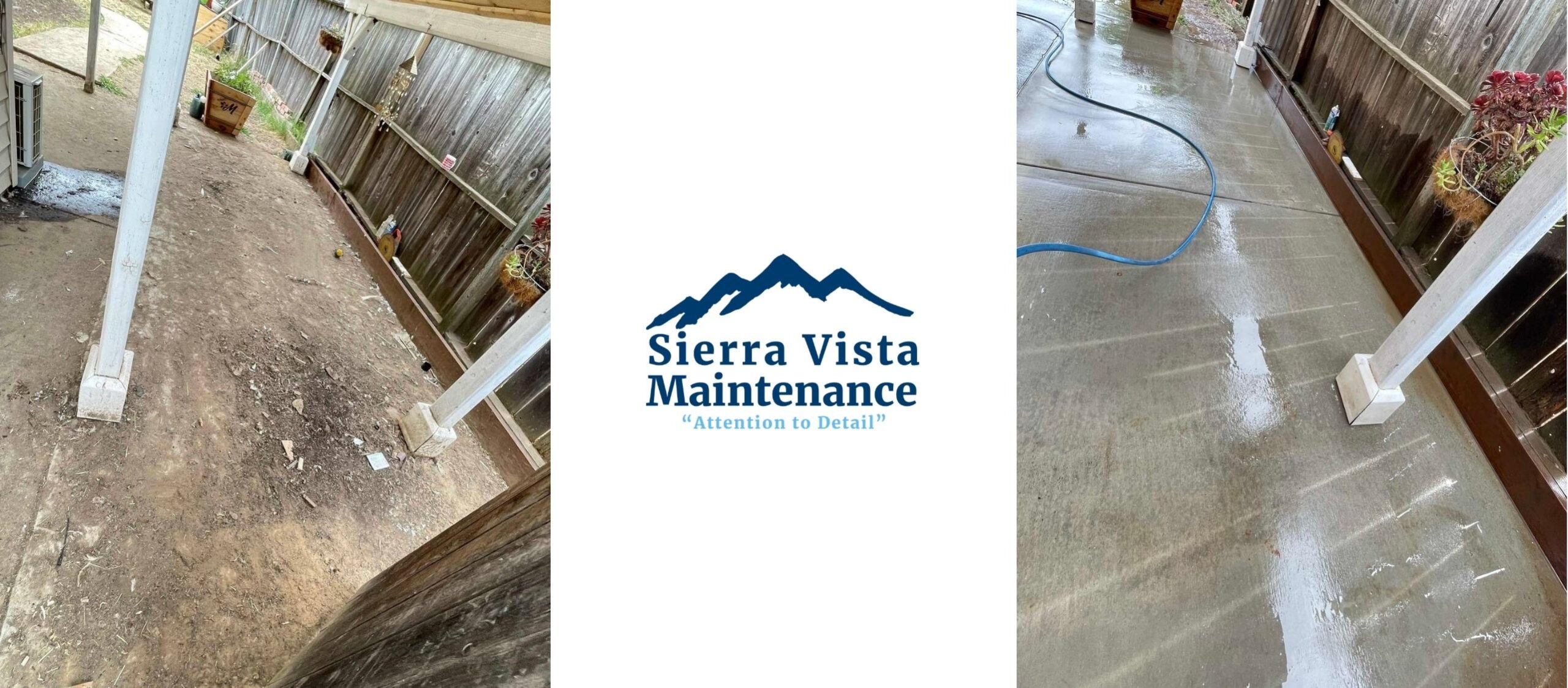
Sap is a resin that bonds to the surface, so it doesn’t rinse or blast off — it needs the right product and dwell time to break the bond before pressure helps. We pre-treat the sap specifically, separate from the needle tannin staining around it, which lifts with an oxalic-acid treatment.
Why is there so much moss on my walkway up here?
The foothill wet season is longer and the wooded-lot shade is deeper than in the valley, so surfaces stay damp for months and grow thick moss. A soft-wash detergent kills it at the root rather than just blasting the top, which slows the return — though the conditions mean it will regrow over time.
Can you clean flagstone and natural stone without damaging it?
Yes, with reduced pressure and attention to the joints. Flagstone and natural stone, common on foothill properties, can’t take the pressure used on a broom-finish driveway. We dial the technique to the material.
Will the brown needle staining fully come off my concrete?
The brown shadowing from pine and oak needles is tannin. An oxalic-acid pre-treatment lifts existing staining, and we’ll give you an honest read on how much. It returns seasonally as the trees keep shedding unless debris is cleared promptly.
How often should a wooded foothill property be cleaned?
Most foothill properties do well on a cleaning timed to follow the wet season, before summer, with shaded surfaces sometimes needing attention again. Because the conifers shed year-round, regular cleaning beats a one-time blast that the trees immediately start undoing.
Request an Estimate
In most cases, we deliver same-day or next-day quotes after we speak with you on the phone or after you complete an estimate request online.