Roof Cleaning in the Fair Oaks Area
Local Context
Fair Oaks and Orangevale sit under some of the oldest tree canopy in the county — big-lot neighborhoods where mature oak arches over rooflines that mostly went up between the 1950s and the 1980s. Citrus Heights runs denser and a little newer, and Antelope newer still, with opener tracts and far less overhead.
That range matters, because what hangs over a roof decides how it gets dirty. A shaded Fair Oaks lot grows moss on the north slope and packs its valleys with oak litter; an open Antelope tract mostly collects dust and the debris the wind brings. One region, two very different roofs, and our roof cleaning services are built to read the difference rather than treat every house the same.
The roof material adds the second variable. Tile and shingle don’t respond to the same method, and a crew that treats them alike either leaves the tile half-done or strips years off the shingle. We read the roof first — material, then exposure — and clean only the slope that needs it.
How We Help Fair Oaks Area Homes & Businesses
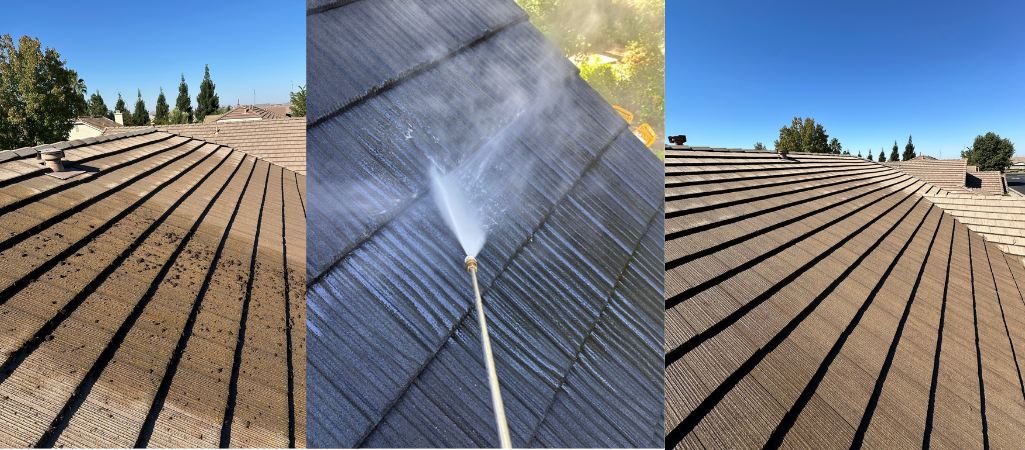
Sierra Vista Maintenance cleans roofs — composition shingle, concrete and clay tile, metal, and low-slope commercial. We do not repair, seal, or replace them. Moss is most of the work, and the method depends on what’s on top of your house: on shingle we brush off the heavy clumps and soft-wash the slope with a low-pressure sodium hypochlorite and surfactant solution, which kills the moss at the root and lets it wash off over the next few rains — we never pressure wash a shingle roof, because that strips the granules protecting it. On tile we pull the moss and debris off mechanically, then rinse at low pressure, and the roof reads finished the same day. We don’t clean wood shake at all, and if we find cracked tile, lifted flashing, or a roof at the end of its life, we photograph it and tell you on the estimate so you can bring in a roofer — we’re cleaners, not roofers.
Across Fair Oaks, Citrus Heights, Orangevale, and Antelope that usually starts in the valleys and behind the chimneys, where oak litter collects and holds water against the roof. From there the work follows the exposure: a shaded north slope gets the moss treatment, an open south face often needs little more than a debris clear and a rinse. Every job ends with ground cleanup and before-and-after photos sent to your email.
Because the debris here doesn’t stop at the roof, a roof cleaning service and a gutter clearing are usually one visit. When you book a roof cleaning service with us on a canopy lot, we’ll tell you honestly whether the gutters below need clearing in the same trip — more often than not, they do.

What Makes Roof Cleaning in the Fair Oaks Area Different
The defining feature of a Fair Oaks or Orangevale roof is the oak over it. Mature valley and cork oak don’t have a single drop season — they shed catkins and pollen in spring, twigs and bark through the summer heat, and a heavy leaf load in the fall. That litter lands on the roof first, collects in the valleys and behind the chimney, and holds moisture long enough to grow moss right where it sits.
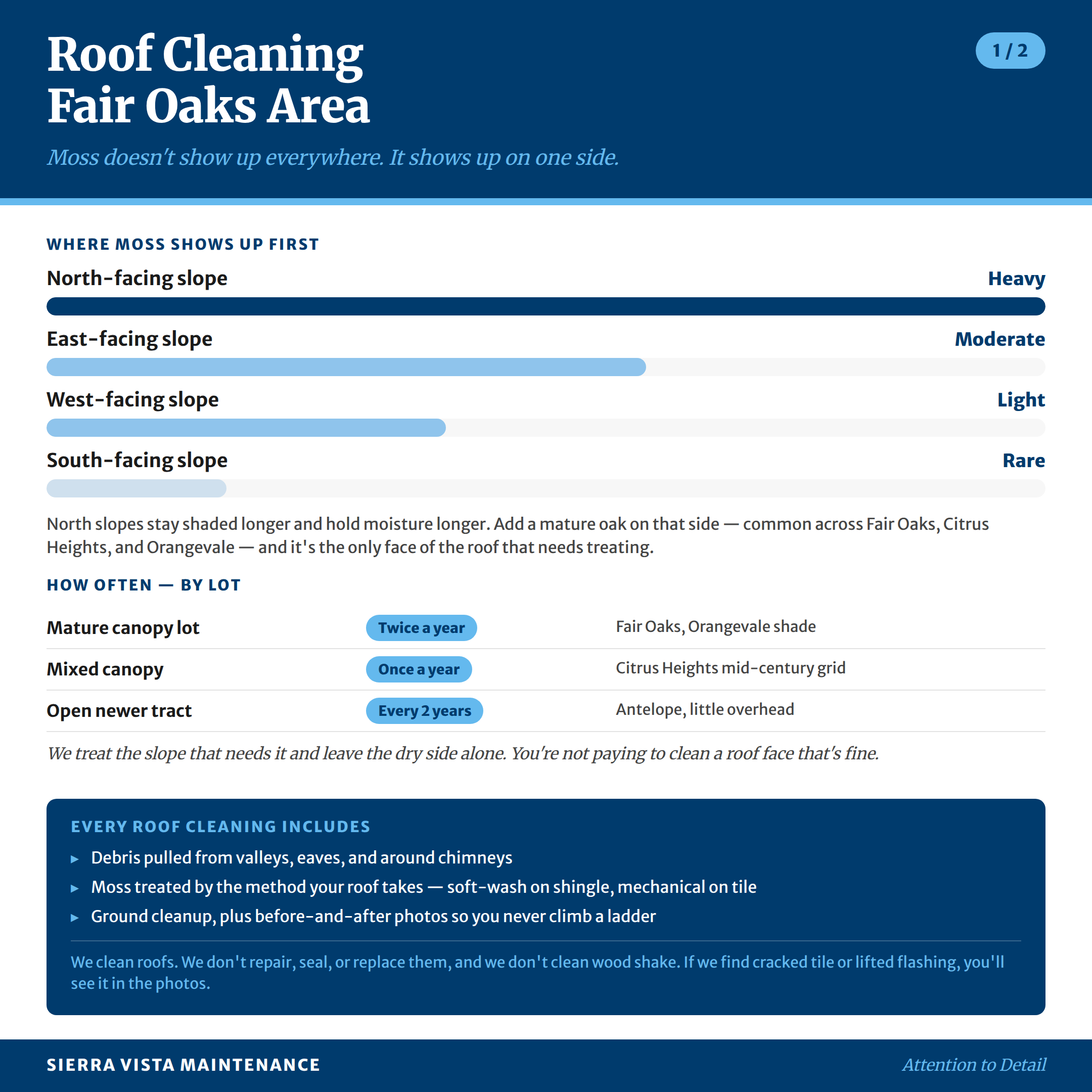
The shade those trees throw does the rest. A north-facing slope under canopy can go the whole wet season without drying, and moss anchors between the shingle tabs or under the tile edges. On the shaded older lots that slope is usually the only part of the roof that needs treating — but it needs it reliably, twice a year on the heaviest-canopy streets.
Antelope is the exception that proves the rule: newer, opener, and less overhead, its roofs collect wind-blown debris rather than growing moss, and they stretch to a much longer schedule. Exposure, not the town line, is what sets the cadence.
Common Roof Cleaning Issues We See in the Fair Oaks Area
A handful of problems bring people to our roof cleaning services again and again here, and most trace back to oak canopy, shade, or the mix of roof ages.
Moss on the shaded slope. North-facing faces under canopy hold moisture all winter and grow moss between the shingle tabs or under the tile edges. Left several seasons it lifts the material and shortens the roof’s life.
Valleys that pack before the gutters do. Oak drops year-round and collects in the valleys and behind chimneys, then releases in a storm and clogs the downspout the same day.
Gentle-pitch litter traps. The 1950s and 60s stock sits at low pitches that hold litter instead of shedding it, so debris sits, stays wet, and starts growing moss where it sits.
Antelope’s wind-blown debris. Opener tracts don’t grow much moss but collect litter in the valleys and flashing that arrives on the delta wind rather than dropping from above.
The Roof and the Gutter Are One Job
Under the Fair Oaks and Orangevale canopy, everything on the roof is headed for the trough. Oak litter lands on the roof, slides down, and stops in the gutter. Clean one without the other and you’ve done half a job — the half that fills back up on the next windy day.
It shows up in the order things clog, too. Debris packs the roof valleys and behind the chimneys first, then releases all at once in a storm and blocks the downspout the same afternoon. Clearing the roof is what actually keeps the gutter clear, which is why on a canopy lot we treat the two as a single maintenance job rather than two separate calls.
It also changes what’s worth pricing. On the heaviest oak lots, gutter guards start to pay off — not because the roof stops shedding, but because they keep what it sheds from packing the trough between visits. We’ll give you an honest read on whether your particular roofline is one where guards earn their keep.
Why is the moss only on one side of my roof?
The north-facing slope stays shaded longest and holds moisture longest, especially under the oak canopy common in Fair Oaks and Orangevale. That’s the face that grows moss, and often it’s the only side that needs treating — we don’t clean a slope that’s fine just to pad the job.
Should I have my gutters done at the same time?
On a canopy lot, almost always. What lands on the roof slides down into the gutter, so clearing the roof without the gutter leaves half the job undone. We’ll give you an honest read on whether yours need clearing in the same visit.
How long until the moss is gone?
It depends on your roof. On concrete or clay tile we pull the moss and debris off mechanically and rinse, so the roof reads finished the same day. On composition shingle we soft-wash and the moss dies back and washes off over the next few rains, so a shingle roof keeps clearing for a few weeks after we leave.
Do you pressure wash the roof?
Not on shingle. High pressure strips the granules that protect a composition roof and voids most shingle warranties. We soft-wash instead. On concrete tile we use gentle pressure after clearing debris by hand, and we never power wash a commercial membrane roof either.
What if you find damage up there?
We photograph it and tell you on the estimate. We clean roofs — we don’t repair, seal, or replace them — but if we spot cracked tile, lifted flashing, or a roof near the end of its life, you’ll see it in the photos and we’ll help point you toward a roofer.
Request an Estimate
Whether it’s a shaded Fair Oaks lot or an open Antelope tract, we’ll match the method to your roof and tell you honestly whether the gutters belong in the same visit. In most cases, we deliver same-day or next-day quotes after we speak with you on the phone or after you complete an estimate request online.