Solar Panel Cleaning in the Lincoln Area
Local Context
Lincoln sits at the northern edge of the Sacramento region, in Placer County where the valley floor meets open ranch and farm country. It was one of California’s fastest-growing cities through the 2000s, and that growth reshaped the town — large master-planned communities, including the Del Webb active-adult neighborhoods of Sun City Lincoln Hills, filled in what had been open grassland.
That history shows up on the rooftops. Much of Lincoln’s housing is newer, built solar-ready or with panels installed from day one, on open lots without the mature tree canopy that shades older towns. The result is a lot of exposed, sun-facing arrays sitting out in the open.
The surroundings matter here. Lincoln is ringed by open agricultural land and grassland, and the wind that crosses it carries field and road dust onto everything downwind. Summers are hot and dry, with essentially no rain from June through September to rinse any of it off.
Whether you own a home in Lincoln Hills or run a business in town, that mix of open, exposed arrays and dusty, rainless summers is what makes regular solar panel cleaning worth scheduling here.
How We Help Lincoln Area Homes & Businesses
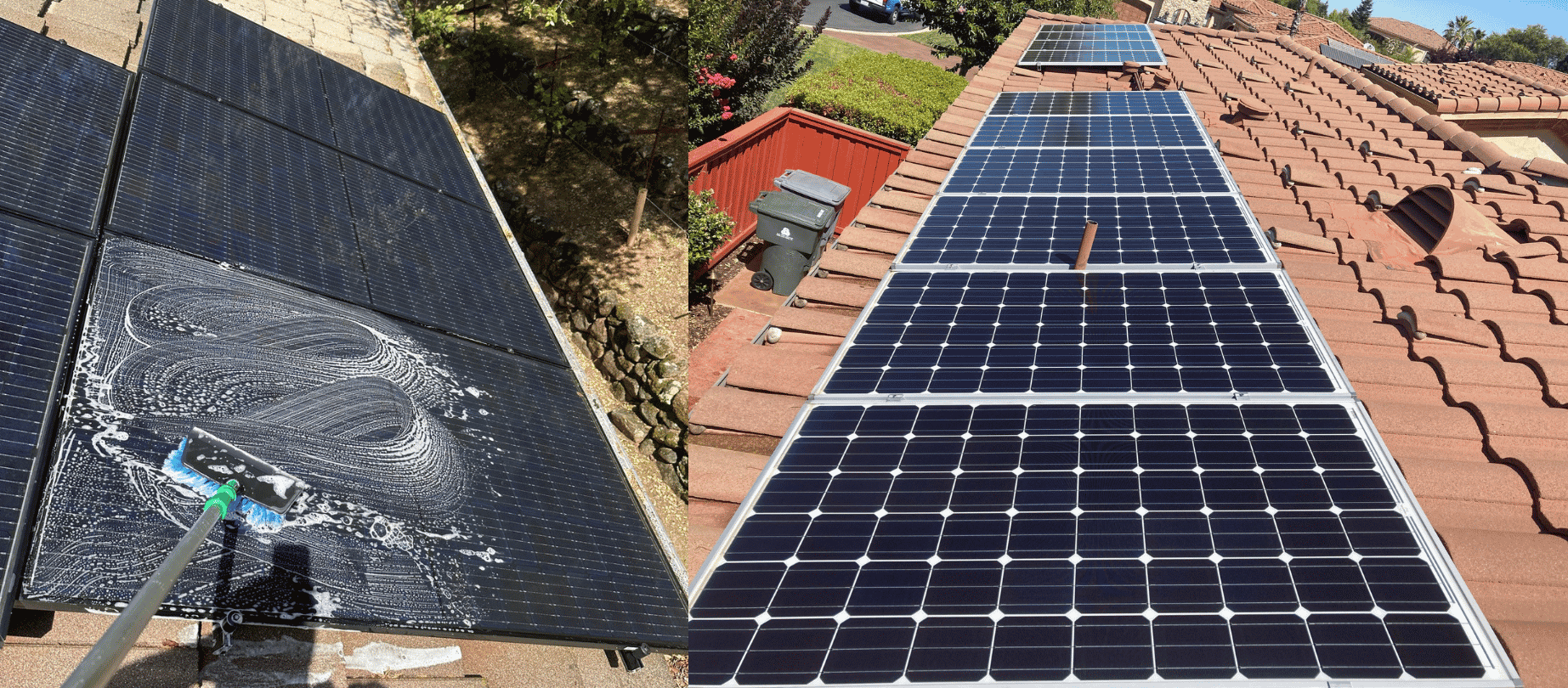
We clean rooftop solar arrays using pure, deionized water and soft-bristle tools on extension poles. Deionized water has had its minerals stripped out, so it lifts pollen, dust, and grime off the glass and then dries with no spots or streaks — no soap, and no residue left behind to attract the next layer of dust.
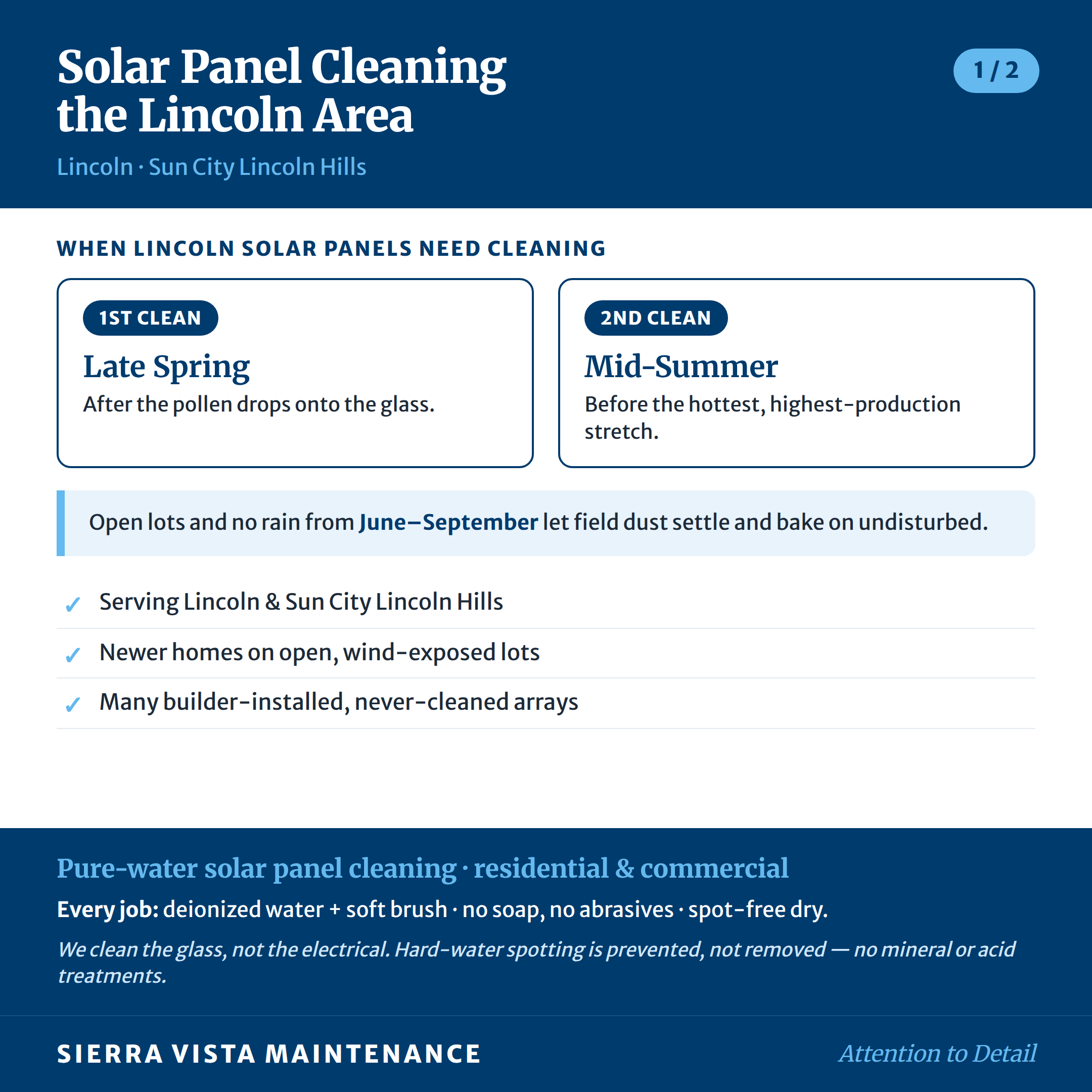
Most of our work here is residential. Our residential solar panel cleaning covers the rooftop arrays on homes across Lincoln and its newer neighborhoods, where open lots and field dust do the most soiling. We time most cleanings for late spring, after the pollen drops, and again in mid-to-late summer, so your panels head into the highest-production months clear. Because so many Lincoln arrays came pre-installed and have never been cleaned, that first visit often makes the biggest difference.
We also clean commercial solar panel installations — the larger roof- and ground-mounted arrays on businesses and multi-tenant properties around Lincoln. The pure-water method is the same; the scale and roof access are what change.
We clean the glass; we don’t service the electrical side of your system. If we spot a cracked panel, a loose clamp, or wiring that looks off while we’re up there, we’ll tell you so you can get the right person out to look at it.

What Makes Solar Panel Cleaning in the Lincoln Area Different
Lincoln’s housing tells you a lot about how its panels get dirty. This is one of the newest towns in the region, built out fast through the 2000s with large master-planned communities — Sun City Lincoln Hills chief among them — on what used to be open grassland and ranch land.
Two things follow from that. First, a lot of Lincoln’s solar came pre-installed on new tract homes, which means many arrays have been quietly soiling since move-in without ever being cleaned. Second, these newer neighborhoods sit on open, cleared lots with young landscaping and little of the mature tree canopy that shades older parts of the region. The panels are out in the full sun and the full wind.
That changes what dirties them. Instead of leaf litter and heavy oak pollen dropping from overhead, the problem here is fine airborne dust off the surrounding fields and roads, settling in a thin even layer across exposed glass. It’s subtler than a pile of leaves, and because it coats the whole array evenly, it’s easy to overlook until production slips. That’s the pattern we see most in Lincoln: not a dramatic mess, but a steady, even dulling that a regular cleaning resets.
Common Solar Panel Cleaning Issues We See in the Lincoln Area
Field and road dust
Ringed by open ag land and grassland, Lincoln’s arrays catch fine wind-blown dust that settles as a thin gray film. On hot glass it bakes on, and a hose rinse won’t fully clear it.
Arrays never cleaned since install
Much of Lincoln’s solar came pre-installed on newer homes, so a lot of panels have been soiling for years without a single cleaning. The first proper cleaning often restores more production than owners expect.
Sprinkler overspray and hard-water spotting
Panels within reach of lawn sprinklers pick up mineral spotting when hard water dries on hot glass. This is best prevented, not removed: keeping spray off the panels and cleaning on a regular schedule stops the minerals from setting in. Spots left to bake on over several summers can etch the glass permanently.
In Lincoln, the Problem Is Open-Lot Dust, Not Tree Debris
In older, tree-shaded towns, the enemy of a solar panel is what falls on it from above — oak pollen, catkins, leaf litter. Lincoln is the opposite case. Its newer neighborhoods sit on open, cleared lots with little mature canopy, so very little drops onto the panels from overhead.
What gets them here blows in sideways. Lincoln is surrounded by open agricultural land and grassland, and the wind that crosses those fields carries fine dust onto everything downwind. That dust doesn’t land in clumps you’d notice from the driveway — it settles as a thin, even film across the whole array, dulling every panel by the same small amount. On sun-baked glass through a rainless summer, that film hardens and builds.
The catch is that even soiling is the easiest kind to miss. There’s no obvious debris to point at, so the panels look roughly fine from the ground even as their output drifts down. That’s why in Lincoln we lean on a regular schedule rather than waiting for a visible mess — by the time open-lot dust looks bad, it’s already been costing you for a while. Because the dust is so fine and even, a steady twice-a-year rhythm keeps a Lincoln array from ever drifting far from its full output.
How often should I clean my solar panels in the Lincoln area?
Twice a year works well for most rooftops here — once in late spring after the pollen drops, and once in mid-to-late summer. Lincoln’s open, exposed lots and the field dust that blows in mean panels soil steadily through the rainless summer, and because that dust coats the glass evenly it’s easy to miss without a regular schedule.
Will hard water spots come off my panels?
Hard water spotting is best prevented, not removed. Fresh spotting from sprinkler overspray rinses off with regular service, but spots left to bake on over several summers can etch the glass and become permanent — and Sierra Vista Maintenance does not perform mineral or acid removal treatments. The fix is staying ahead of it: regular cleaning and keeping sprinkler spray off the panels keep the minerals from ever setting in.
My panels came with the house and have never been cleaned. Is that a problem?
Often, yes. A lot of Lincoln’s solar was installed on newer homes and has been soiling since move-in without a cleaning. Years of fine dust build into a film that quietly drags down output, and the first proper cleaning usually restores more than owners expect.
Do you clean commercial solar arrays in the Lincoln area?
Yes. Along with residential rooftops, we clean the larger roof- and ground-mounted arrays on businesses and multi-tenant properties around Lincoln. The pure-water method is the same; we adjust for the scale and roof access of a commercial site.
Why do you use deionized water instead of just a garden hose?
Tap water here carries dissolved minerals. Spray it on hot panels and it dries into chalky spots that reflect light away from the cells and, left long enough, bake on for good. Deionized water has those minerals removed, so it rinses the glass clean and dries with no spots and no soapy film. A plain hose rinse can leave your panels worse off than before.
Request an Estimate
In most cases, we deliver same-day or next-day quotes after we speak with you on the phone or after you complete an estimate request online.