Solar Panel Cleaning in the North Sacramento Area
Local Context
North Sacramento covers a wide, flat stretch north of the American River — the Natomas basin, North Highlands, and the semi-rural pockets of Rio Linda and Del Paso Heights. Much of Natomas is built on reclaimed floodplain: low, level ground ringed by levees and laid out in open, newer subdivisions.
It’s some of the most open, wind-exposed ground in the region. There’s little of the mature tree canopy that shades the older suburbs, so Natomas rooftops sit out in full sun and full wind — and Sacramento International Airport sits right in the middle of it.
North of there, Rio Linda and parts of Del Paso keep a semi-rural character — larger lots, gravel roads, open fields — while Natomas is newer tract housing, much of it built solar-ready. Two different kinds of roof, one dusty, wide-open basin.
Summers run hot and dry, with no rain from June through September to clear a thing. That’s the backdrop that makes regular cleaning worth scheduling across North Sacramento.
How We Help North Sacramento Area Homes & Businesses
We clean solar for both sides of North Sacramento — the newer arrays across Natomas and the older, semi-rural roofs up in Rio Linda and North Highlands. Our method is pure, deionized water and soft-bristle tools. Deionized water is simply tap water with its dissolved minerals removed; on an exposed Natomas roof that’s what lets us rinse the fine basin dust away cleanly, instead of leaving the chalky mineral spots a hose leaves behind.
Most of what we do here is residential. Our residential solar panel cleaning covers rooftop arrays from the newer Natomas subdivisions to the older roofs of Rio Linda and Del Paso, where wide-open exposure does the most soiling.
We also clean commercial solar panel systems on the warehouses, fleet yards, and business parks around North Highlands and the McClellan area. The pure-water approach carries straight over; only the scale and access change.
We stay on the glass and leave the wiring to your solar tech. On these open roofs we also check that nothing has worked loose in the wind and that nothing has nested under the panels — common on wide-open lots — and flag it for you.

What Makes Solar Panel Cleaning in the North Sacramento Area Different
The area’s split personality in housing drives how its panels get dirty. Natomas is one of the region’s newer build-outs — subdivisions that went up on former farmland, most of them solar-ready or with panels installed new. Rio Linda, North Highlands, and Del Paso are older and more rural.
That difference matters. Newer Natomas arrays sit on open, cleared lots with young landscaping and no canopy, fully exposed to sun and wind — and because so many came pre-installed with the house, plenty have been soiling since move-in without a single cleaning. The semi-rural roofs up north face a different diet: dust off gravel roads, open fields, and the odd livestock lot rather than tract-home landscaping.
So ‘how often’ genuinely isn’t one answer across North Sacramento. A five-year-old Natomas array on an exposed lot and an older Rio Linda roof beside a field are collecting different things at different rates, and we set the schedule to the roof rather than to a template.
We also see plenty of arrays that came with the house and haven’t been touched since move-in; on those, the first cleaning tends to make the biggest single difference. North Highlands adds its own wrinkle, with wide, open lots around the old McClellan business park that leave roofs just as exposed as the newer basin tracts.
Common Solar Panel Cleaning Issues We See in the North Sacramento Area
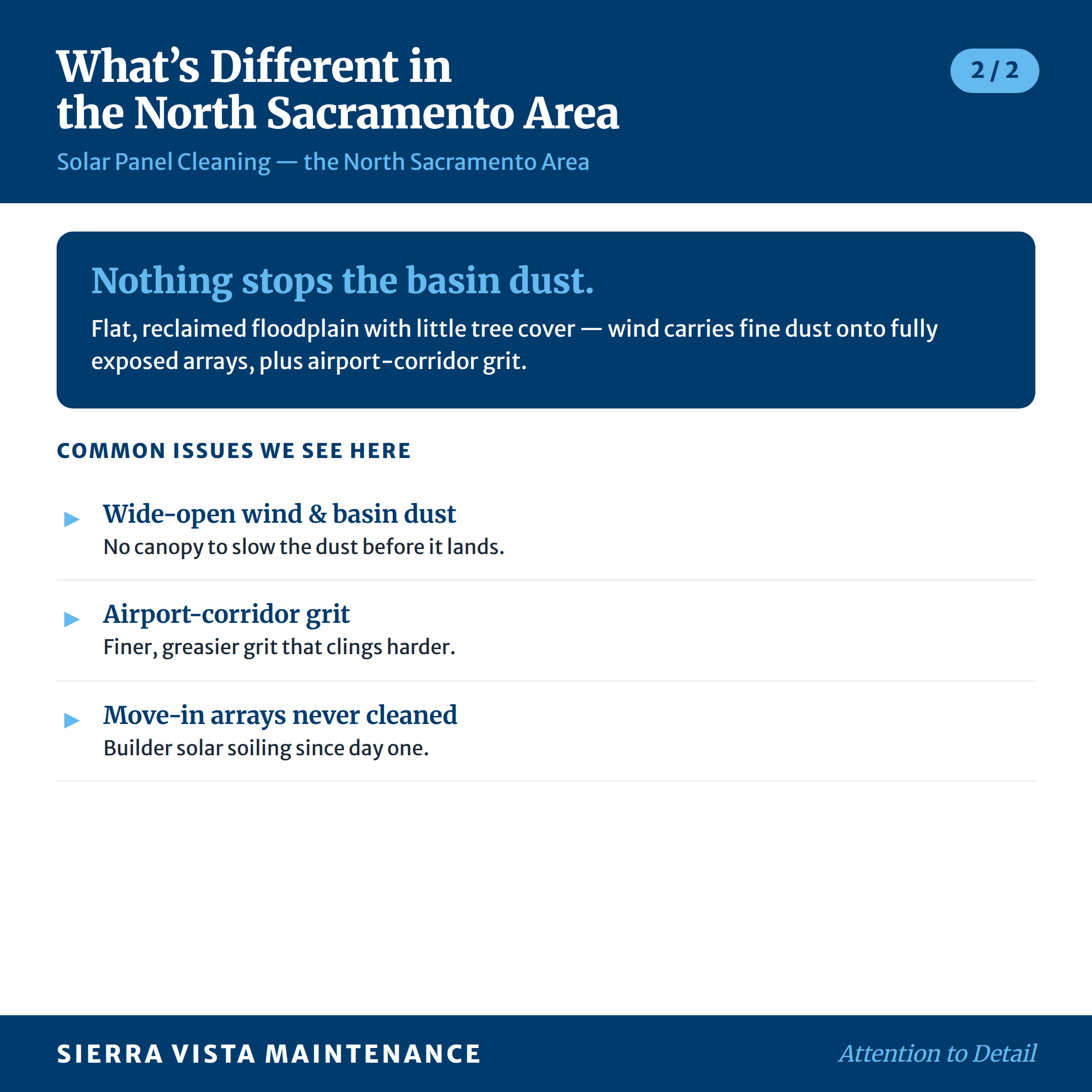
Wide-open wind and basin dust
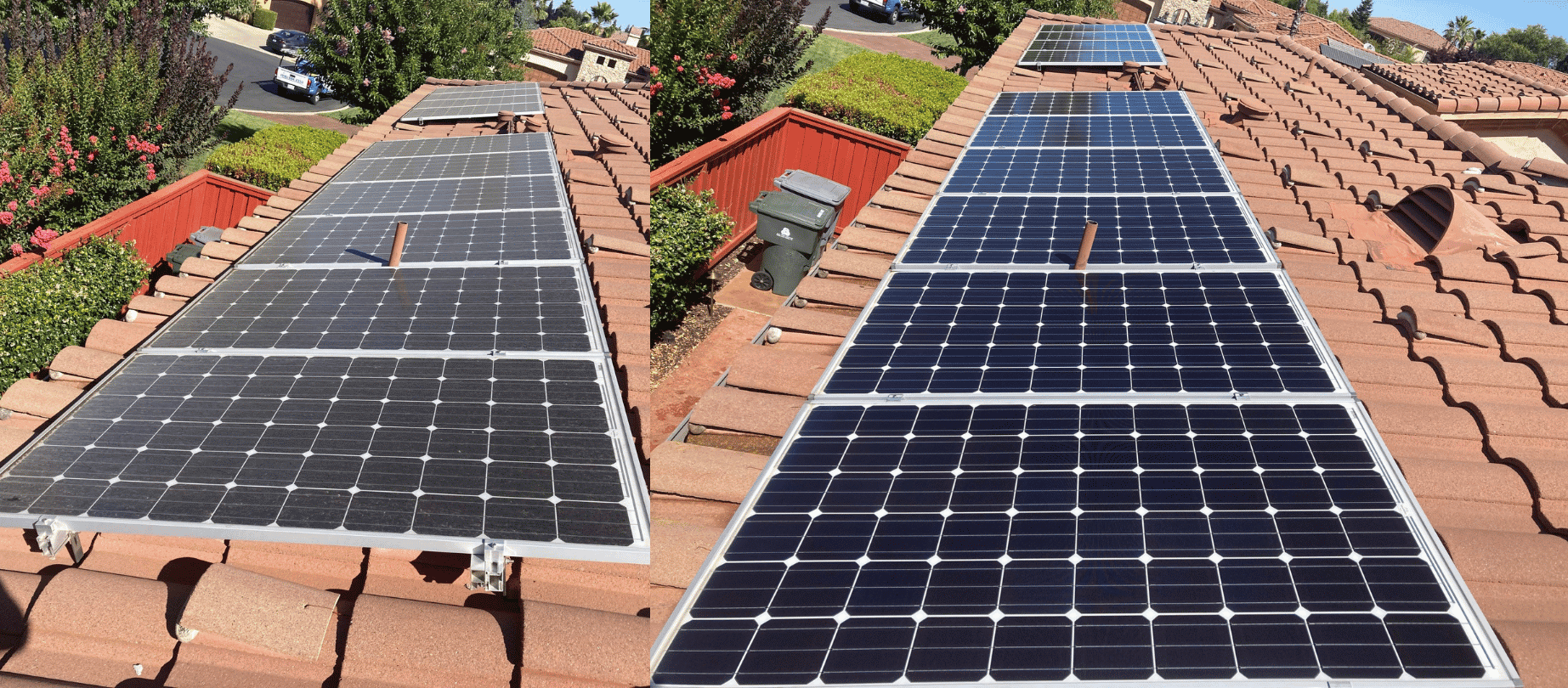
Exposed reclaimed-basin roofs catch wind-blown dust with no canopy to slow it. It lands as a thin, even film and, on hot glass, bakes into a haze a rinse won’t fully clear.
Airport-corridor grit
With Sacramento International in the heart of Natomas, roofs under the busier corridors pick up a finer, greasier grit that clings harder than plain dust.
Move-in arrays never cleaned
A lot of Natomas solar came pre-installed on newer homes. Years of quiet buildup add up, and the first cleaning often restores more output than owners expect.
Full-sun bake with no canopy
With little tree cover anywhere in the basin, panels take unbroken sun all summer, which bakes settled dust into a haze faster than it would set on a shaded roof.
Out in the Natomas Basin, There’s Nothing to Stop the Dust
Natomas is built on flat, reclaimed floodplain — low, open, level ground behind levees, with almost none of the mature tree cover that shelters older parts of the county. On a wide-open roof like that, there’s nothing to break the wind or catch the dust before it reaches your panels.
So it settles. Fine basin dust rides the wind across open lots and lays down a thin, even film on exposed glass; on a hot summer roof it bakes into a haze. Because it coats the whole array evenly, it doesn’t look like much from the driveway even as it trims output across every panel.
The airport adds to it. Sacramento International sits in the middle of Natomas, and roofs under the busier flight corridors pick up a finer, greasier grit from exhaust — the kind that clings to glass harder than dust that simply blows in.
With no rain from June through September, none of it clears on its own. On exposed basin roofs a regular schedule isn’t about chasing a visible mess; it’s about resetting an even film before it quietly costs you a full season of production.
There’s an easy tell for it. Because open-lot dust dulls the whole array at the same rate, the panels look roughly fine from the driveway even after they’ve dropped several percent — so the loss shows up in the monitoring app long before it shows up to the eye.
How often should I clean my solar panels in the North Sacramento area?
Twice a year works for most roofs here, and exposed Natomas arrays can warrant a closer eye. The open, wind-swept basin keeps fine dust settling all summer, and with no rain from June through September nothing rinses it off — so a steady schedule matters more than it would on a sheltered roof.
Will hard water spots come off my panels?
Hard water spotting is best prevented, not removed. Fresh spotting from sprinkler overspray rinses off with regular service, but spots left to bake on over several summers can etch the glass and become permanent — and Sierra Vista Maintenance does not perform mineral or acid removal treatments. The fix is staying ahead of it: regular cleaning and keeping sprinkler spray off the panels keep the minerals from ever setting in.
Does the open Natomas exposure really make a difference?
It does. Without tree cover to slow the wind, fine basin dust settles freely and coats the whole array evenly, and grit from the airport corridor clings harder still. Because it dulls every panel at once, it’s easy to miss from the ground while it trims your output.
Do you clean commercial solar arrays in the North Sacramento area?
Yes. Along with homes, we clean the roof- and ground-mounted systems on warehouses, fleet yards, and business parks around North Highlands and McClellan. The pure-water method is the same; we adjust for the scale and roof access of a commercial site.
Isn't rinsing with a garden hose good enough?
Not really. A hose sprays mineral-laden tap water that dries into chalky spots on hot glass, and it tends to smear fine basin grit rather than lift it. Deionized water has the minerals removed, so it carries the dust off and dries with no spots and no film for the next layer to cling to.
Request an Estimate
In most cases, we deliver same-day or next-day quotes after we speak with you on the phone or after you complete an estimate request online.