Dryer Vent Cleaning in Placerville & El Dorado County
Local Context
The Placerville and El Dorado County service area follows Highway 50 east from El Dorado Hills up into the Sierra foothills — Placerville, Diamond Springs, Shingle Springs, and Rescue — on wooded lots and larger rural parcels. The housing is older and more varied than the valley floor: custom builds, ranch homes, and the occasional home with a basement, set among pine, cedar, and oak.
Dryer vent work here looks different as a result. Local requests skew strongly toward wall terminations — one Placerville homeowner described a vent that exits to the backyard wall — and the wooded setting brings wildlife into the picture. An El Dorado homeowner flagged a roof vent that appeared clogged with a dormant wasp nest.
At higher elevations, the foothill climate runs cooler and wetter than Sacramento, with a longer damp season that works on lint differently than valley air does. On larger rural lots, the run from the dryer to its termination can be longer than the house size suggests.
How We Help Placerville & El Dorado County Homes & Businesses
We start by confirming where the vent exits — usually a side wall here, sometimes a roof cap on the steeper-roofed homes. We pull the dryer, disconnect the transition hose, and run a rotating brush sized to your duct through the full run, clearing the exterior hood and checking the damper. In a wooded setting we pay attention to what’s living in the hood, because nesting is more common here than down in the valley.
We verify airflow with an anemometer at the termination and reconnect with a properly sized rigid or semi-rigid hose. For the larger rural properties around Shingle Springs and Rescue, that often means a longer run to brush and confirm. Sierra Vista Maintenance serves Placerville, Diamond Springs, Shingle Springs, and Rescue across the El Dorado County foothills.
What Makes Dryer Vent Cleaning in Placerville & El Dorado County Different
The El Dorado County foothills sit higher and wetter than the Sacramento Valley floor, and the difference shows up inside a dryer duct. Placerville and the towns above it get a longer, damper cool season — more days of fog and rain, and snow at the higher elevations toward Pollock Pines — than homes down in the valley.
That extended damp season is hard on dryer vents. Moisture in the duct turns loose lint into a packed, hardened crust against the wall, and the longer the run stays damp, the more stubborn that layer gets. A homeowner with a shop-vac moves the first few feet and compresses the rest. On the wooded foothill lots common here, the exterior hood also stays shaded and cool longer, which keeps the termination damp and inviting to nesting wildlife. Clearing a foothill vent properly takes a rotating brush at the right diameter and a real look at what has accumulated — lint and otherwise — at the hood.
Common Dryer Vent Issues We See in Placerville & El Dorado County
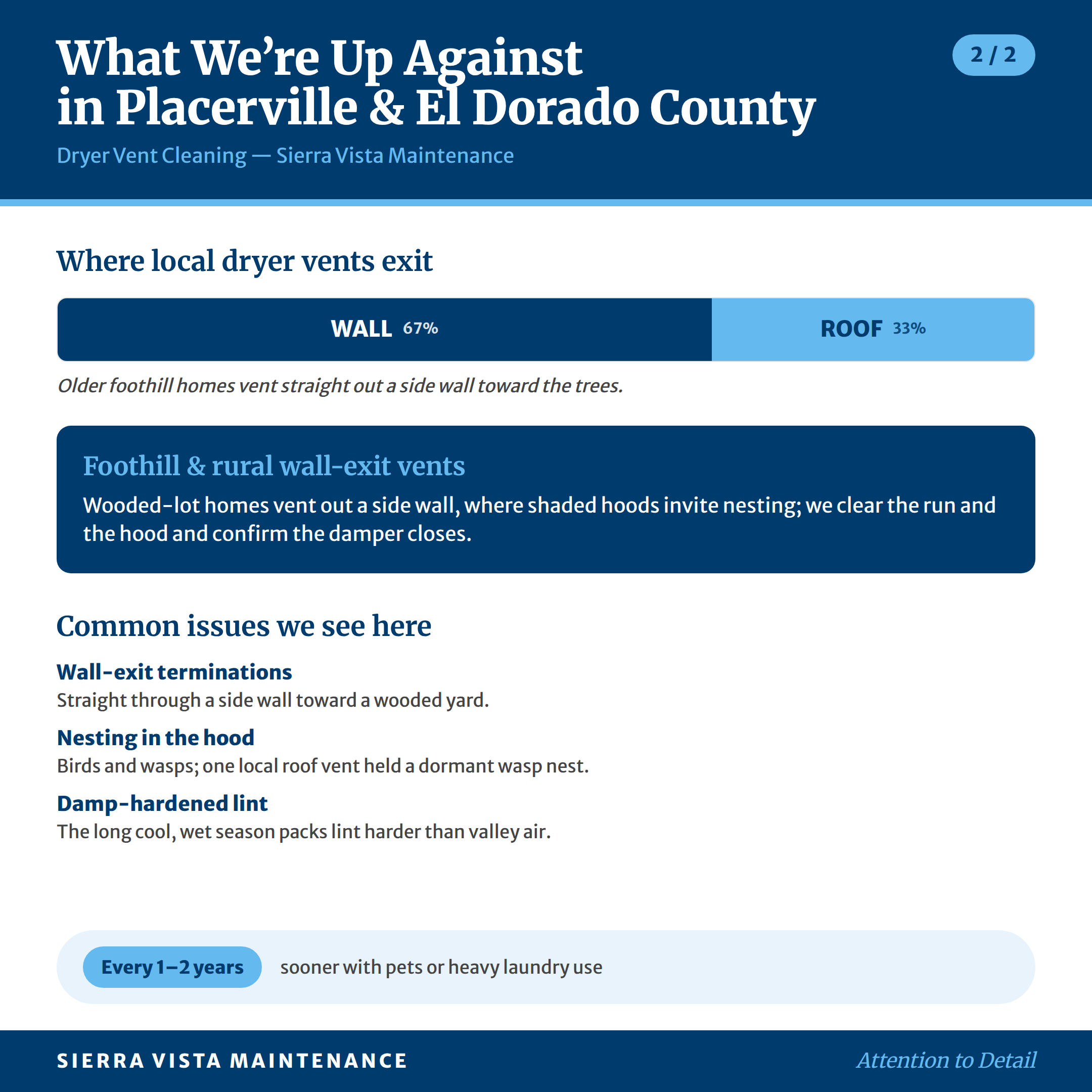
- Wall-exit terminations. Older foothill homes vent straight through a side wall toward a wooded yard.
- Nesting in exterior hoods. The wooded setting brings birds and wasps; one local roof vent held a dormant wasp nest.
- Damp-hardened lint. The longer cool, wet foothill season packs lint harder than valley air does.
- Longer rural runs. Larger Shingle Springs and Rescue lots can mean a longer path to the termination.
- Varied, older construction. Custom builds and homes with basements route vents in non-standard ways.
Foothill and Rural Vents in the El Dorado County Backcountry
Servicing a dryer vent in Placerville or Shingle Springs isn’t quite like doing one in a valley subdivision. The homes are older and more individual — custom builds, ranch homes, the occasional basement — and they sit on wooded lots where the dryer usually vents straight out a side wall toward the trees. Our local requests run heavily toward wall terminations, the reverse of the roof-heavy valley corridors.
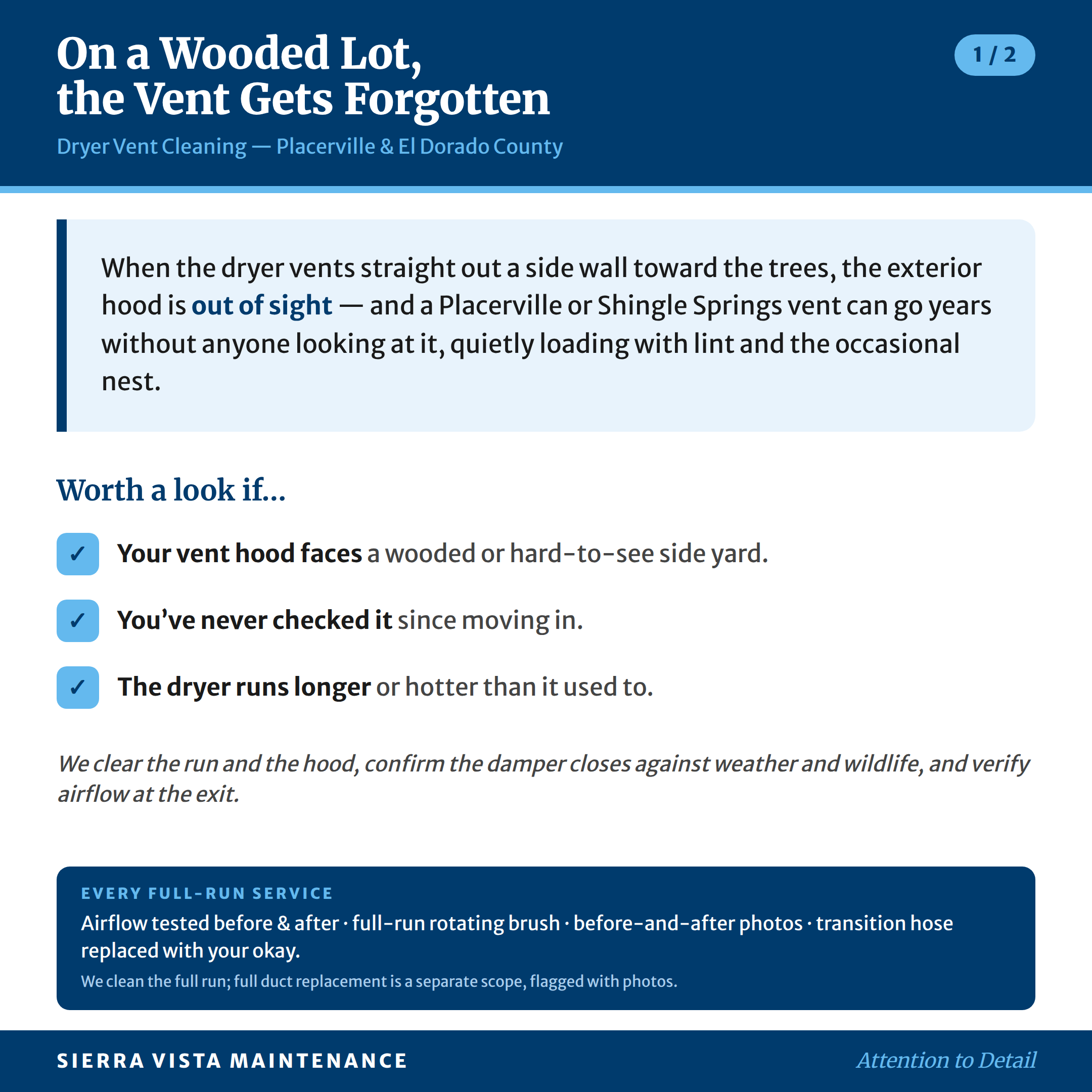
The wooded setting is the other half of the story. A vent hood that faces a stand of pine or oak, shaded and cool, is an open invitation to nesting — one El Dorado homeowner found what looked like a dormant wasp nest packed into a roof vent. Birds and wasps both block airflow and add dry, combustible material right where the heat and lint exit. So in the foothills we treat the exterior hood as part of the job, not an afterthought: we clear it, confirm the damper still closes against weather and wildlife, and verify airflow at the termination. On the larger rural parcels around Rescue and Diamond Springs, the run to that termination is simply longer, which makes measuring the result at the far end all the more worthwhile.

I’m on a wooded lot — could something be nesting in my vent?
Yes, and it’s more common here than in the valley. A shaded exterior hood facing the trees attracts birds and wasps; one local roof vent held a dormant wasp nest. We clear the hood and confirm the damper closes against weather and wildlife.
My vent exits through a side wall — is that what you usually see here?
Yes. Wall terminations dominate in the foothills, the reverse of the roof-heavy valley corridors. We confirm the exit and clean the full run either way.
Does the cooler, wetter foothill weather affect my vent?
It does. The longer damp season turns loose lint into a hardened crust against the duct wall that a shop-vac only compacts. Breaking it loose takes a rotating brush at the right diameter.
I’m on a larger rural lot — does that change the job?
Sometimes the run to the termination is longer, so there’s more duct to brush and confirm. The full-run approach is the same; we just measure airflow at a more distant exit.
How often should it be done?
Every one to two years for most homes, and more often with pets or heavy laundry use.
Request an Estimate
In most cases, we deliver same-day or next-day quotes after we speak with you on the phone or after you complete an estimate request online.