Solar Panel Cleaning in Placerville & El Dorado County
Local Context
Placerville anchors the western Sierra foothills as the El Dorado County seat — a historic Gold Rush town, still called Hangtown by locals, perched on Highway 50 partway up toward Lake Tahoe. Diamond Springs, Shingle Springs, and Rescue spread out around it through oak-and-pine country a couple thousand feet above the valley floor.
This is deep foothill living: large parcels, long driveways, private wells, and wood stoves against the winter cold. Homes sit among the trees on acreage rather than in tight subdivisions, and a lot of them run solar — often sized big, to cover a well pump and a shop on top of the house.
It’s also some of California’s most fire-tested country. El Dorado County lived through the Caldor Fire in 2021 and the King Fire before it in 2014, and lighter smoke seasons fill in the years between. Between the forest, the elevation, and the fire risk, foothill panels face conditions no valley roof does.
Summers here run hot and rainless from June into fall, and the extra foothill rain that arrives later doesn’t clear the residues that matter most. That’s what makes regular cleaning worth scheduling across Placerville and El Dorado County.
How We Help Placerville & El Dorado County Homes & Businesses
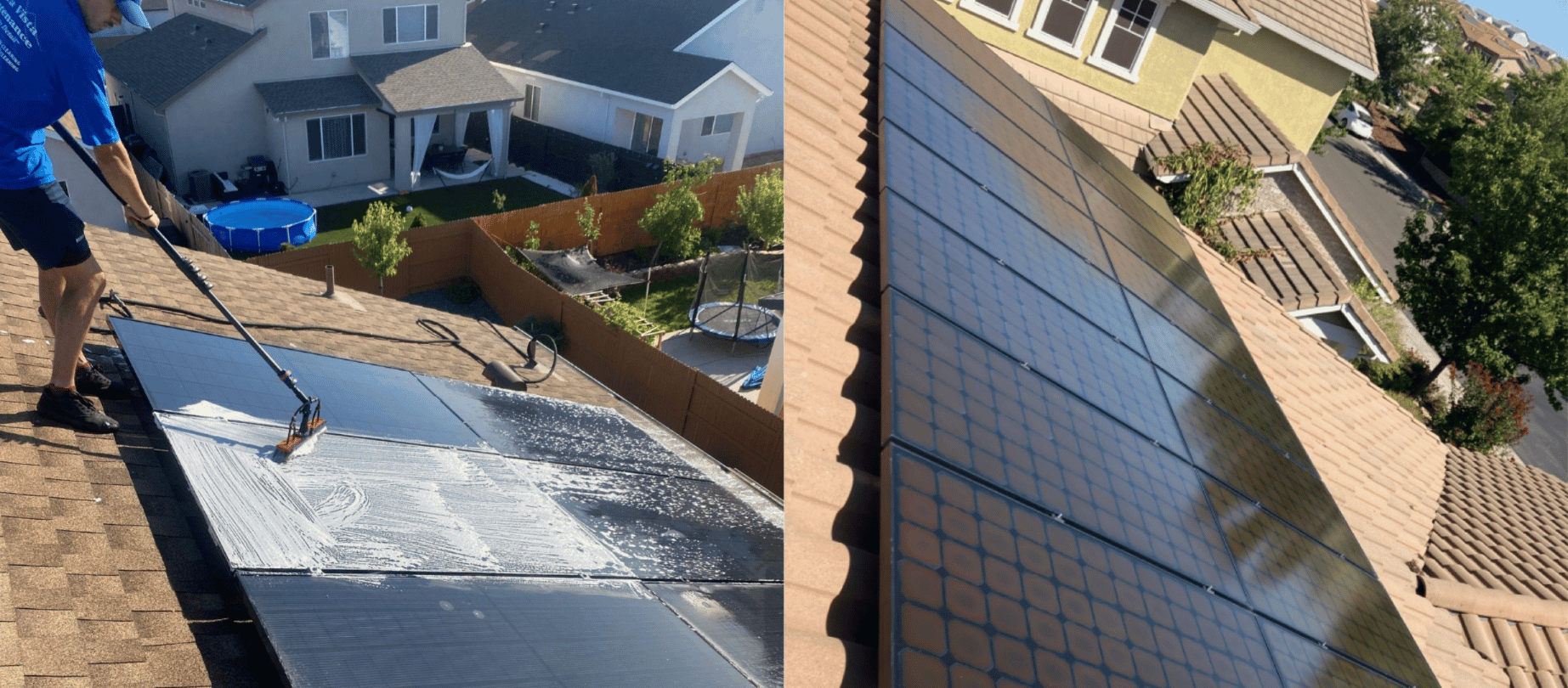
Cleaning solar this deep in El Dorado County means dealing with things the valley never sees — wildfire ash, winter woodsmoke, hard well water, and big rural arrays spread across acreage. We clean with pure, deionized water and soft brushes. Stripping the minerals out of the water is what lets it cut through greasy ash and soot and rinse them clear without soap, then dry without leaving spots of its own — something ordinary well or tap water simply can’t manage.
Most of our foothill work is residential. Our residential solar panel cleaning covers the rooftop and ground-mounted arrays on properties across Placerville, Shingle Springs, Diamond Springs, and Rescue, where fire-season ash and forest debris do the most work on the glass.
We also clean commercial solar panel systems on the businesses, tasting rooms, and Apple Hill-area operations along the Highway 50 corridor. The pure-water approach is the same; the scale and the access change.
We handle the cleaning, not the electrical. On big rural systems we often find ground-mounts set behind the house and panels up on shops and barns, and while we’re out there we’ll flag anything that looks off — a scorched connector, animal nesting, sap or moss taking hold — for your installer to look at.

What Makes Solar Panel Cleaning in Placerville & El Dorado County Different
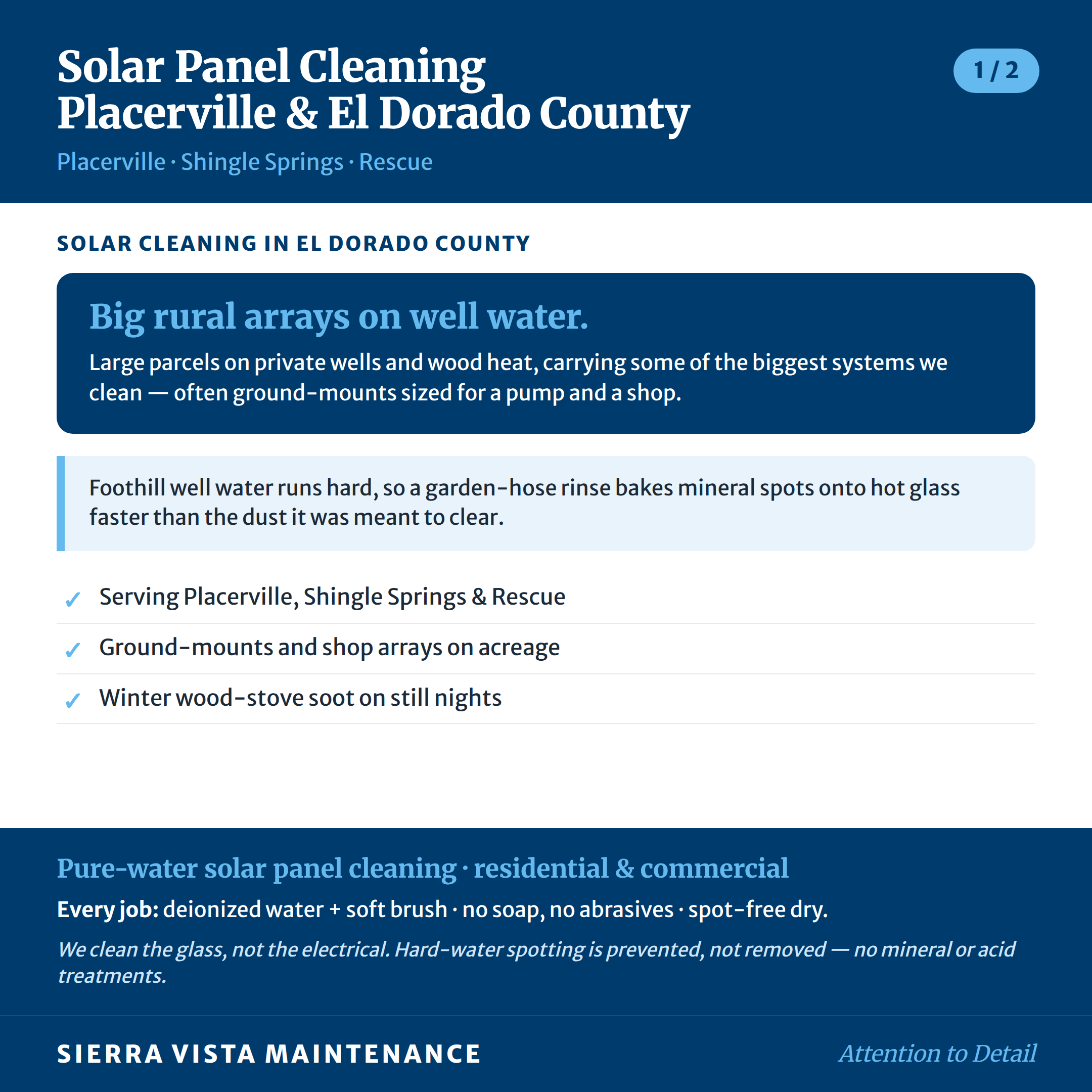
What sets these properties apart starts with how they’re built and served. These are large rural parcels, not tract lots — homes on acreage, often on private wells, heated through winter with wood stoves, and carrying some of the biggest solar systems we clean anywhere.
The well water is the quiet catch. Foothill groundwater tends to run hard, so a homeowner who climbs up to rinse the panels with the garden hose is spraying mineral-heavy water onto hot glass — which dries into spots that are far tougher to deal with than the dust they were trying to clear. It’s the fastest way to trade a light film for permanent-looking spotting.
And the systems are large. A rural array sized for a well pump, a shop, and the house can run to forty or fifty panels, so a season of soiling adds up across a lot of glass at once — and it rarely soils evenly, since a ground-mount by the treeline and a roof panel in the open collect at different rates. Come winter, wood-stove smoke settles a fine soot over the hills on still nights, laying down one more layer the foothill rain won’t fully rinse. A foothill property collects a heavier, more varied mix than any valley roof, and the cleaning has to account for all of it.
Common Solar Panel Cleaning Issues We See in Placerville & El Dorado County
Wildfire ash and soot
Fire-season ash carries fine, oily carbon that bakes onto hot glass and clings. Rain tends to smear it into a film rather than wash it off, so it can sit on the panels for months after the smoke clears.
Winter wood-smoke film
On still winter nights, wood-stove smoke settles a fine soot across the hills. It’s subtle, but it adds a greasy layer that ordinary rain leaves behind.
Hard well-water spotting
Rinsing panels with hard well water bakes mineral spots onto hot glass — best prevented, not removed. Keeping that water off the glass and cleaning on a schedule stops the minerals from setting in.
Uneven soiling on big arrays
On large rural systems, a ground-mount near the trees and a roof panel in the open dirty at different rates. Because panels share strings, the dirtier section can drag down the output of cleaner ones beside it.
In El Dorado County, Fire Season Sets the Cleaning Calendar
El Dorado County has become one of California’s most fire-tested places. The Caldor Fire tore through the county in 2021, the King Fire came before it in 2014, and lighter smoke seasons fill the years between. For solar owners up here, wildfire isn’t an occasional event — it’s a recurring part of the year that lands straight on the panels.
Ash and soot aren’t like dust. They carry fine, oily carbon that clings to glass, and when they settle on a hot summer roof they bake into a greasy film. The extra rain the foothills get later in the year smears that film around rather than washing it off, so it can sit on the array for months, quietly cutting output the whole time.
Timing is the whole game with ash. A cleaning in the middle of an active smoke stretch just gets re-coated within days. The one that counts is the clean after the season winds down — usually late summer into fall — when clearing the ash actually holds, and the panels head into the lower-sun winter months working at full strength.
So up here we build the schedule around fire season as much as around pollen or dust. For an El Dorado County array, the post-fire cleaning is often the single most valuable one of the year — and on the big systems common out here, that’s a lot of recovered production riding on one well-timed visit.
How often should I clean my solar panels in Placerville or El Dorado County?
Twice a year suits most foothill properties — once in spring after the pollen and needle drop, and once after fire season, which is usually the key one here. Ash and soot don’t rinse off in the rain the way dust does, so waiting on the weather tends to leave the residues that matter most sitting on the glass.
Will hard water spots come off my panels?
Hard water spotting is best prevented, not removed. Fresh spotting from sprinkler overspray rinses off with regular service, but spots left to bake on over several summers can etch the glass and become permanent — and Sierra Vista Maintenance does not perform mineral or acid removal treatments. The fix is staying ahead of it: regular cleaning and keeping sprinkler spray off the panels keep the minerals from ever setting in.
Does wildfire smoke really affect my solar output?
It does. Ash and soot carry oily carbon that bakes onto hot panels and clings, and the foothill rain smears it into a film instead of washing it off. Left there, it can trim output for months — which is why a cleaning after the smoke settles is the one that matters most up here.
Do you clean commercial solar arrays in Placerville and El Dorado County?
Yes. Along with homes, we clean the roof- and ground-mounted systems on businesses, tasting rooms, and Apple Hill-area operations along the Highway 50 corridor. The pure-water method is the same; we adjust for the scale, slope, and access of a foothill commercial site.
Can I just rinse my panels with the garden hose?
Out here that often makes things worse. Most foothill homes run on hard well water, which dries into mineral spots on hot glass, and a hose won’t lift baked-on ash or soot — it just smears it. Deionized water has the minerals removed, so it breaks those films down, rinses clean, and dries with nothing left behind.
Request an Estimate
In most cases, we deliver same-day or next-day quotes after we speak with you on the phone or after you complete an estimate request online.