Solar Panel Cleaning in the Rancho Cordova Area
Local Context
Rancho Cordova straddles Highway 50 east of Sacramento, running from the American River down through business parks and neighborhoods toward the White Rock Road corridor. It incorporated in 2003 and carries a long industrial and aerospace history — the former Mather Air Force Base, now Mather Airport and a growing business district, sits at its southern edge, and the region’s aerospace roots run deep here.
The housing is a mix. Older postwar neighborhoods near the original town sit alongside newer master-planned developments like Anatolia and Sunridge farther east, so rooftops here range widely in age — and a good share of them carry solar. Add the office parks and commercial sites along the freeway and you get both residential and commercial arrays across the area.
Summers are hot and dry on this part of the valley floor, with essentially no rain from June through September to rinse the panels. Whatever settles on the glass in spring is still there in late summer, baked on by the heat.
Whether you own a home in Anatolia or manage a building near Mather, that mix of a busy freeway corridor and long rainless summers is what makes regular solar panel cleaning worth scheduling here.
How We Help Rancho Cordova Area Homes & Businesses
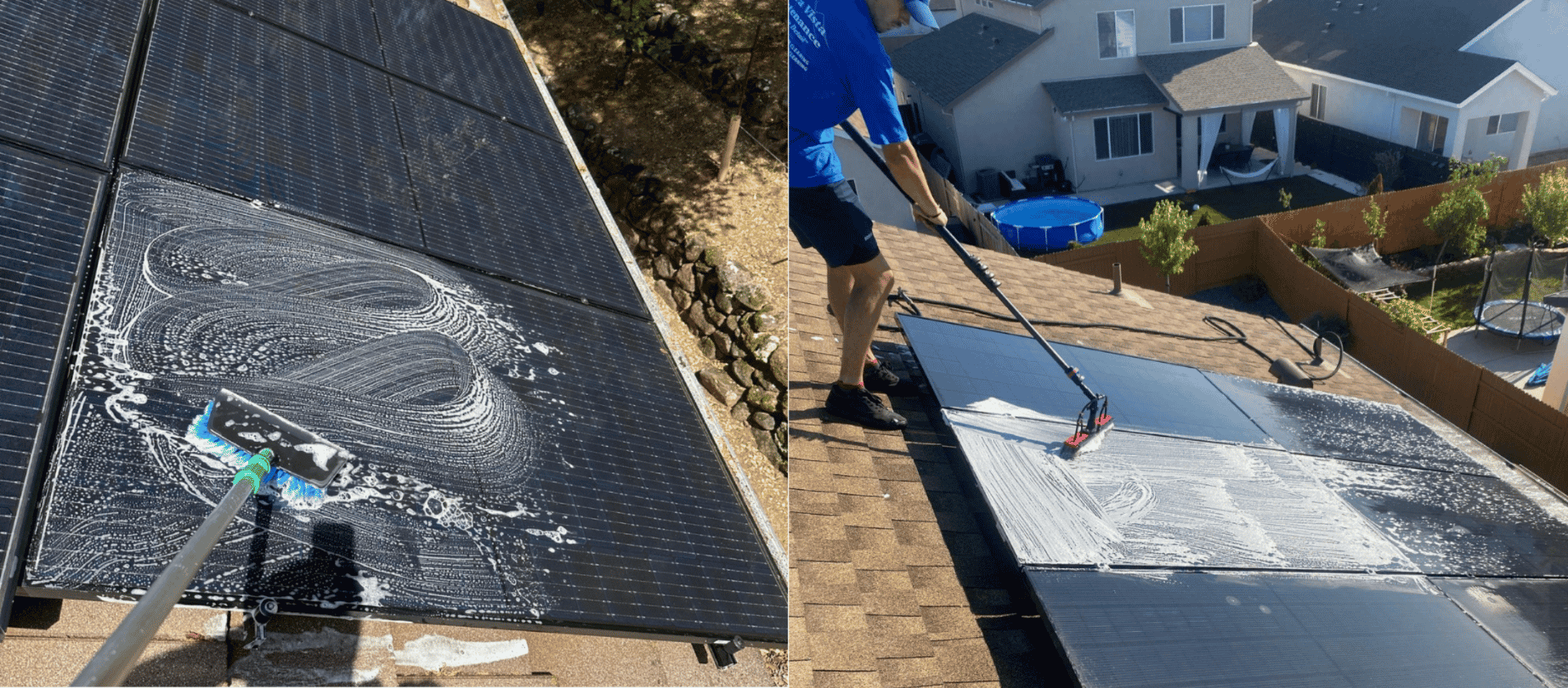
We clean rooftop solar arrays using pure, deionized water and soft-bristle tools on extension poles. Deionized water has had its minerals stripped out, so it lifts pollen, dust, and grime off the glass and then dries with no spots or streaks — no soap, and no residue left behind to attract the next layer of dust.
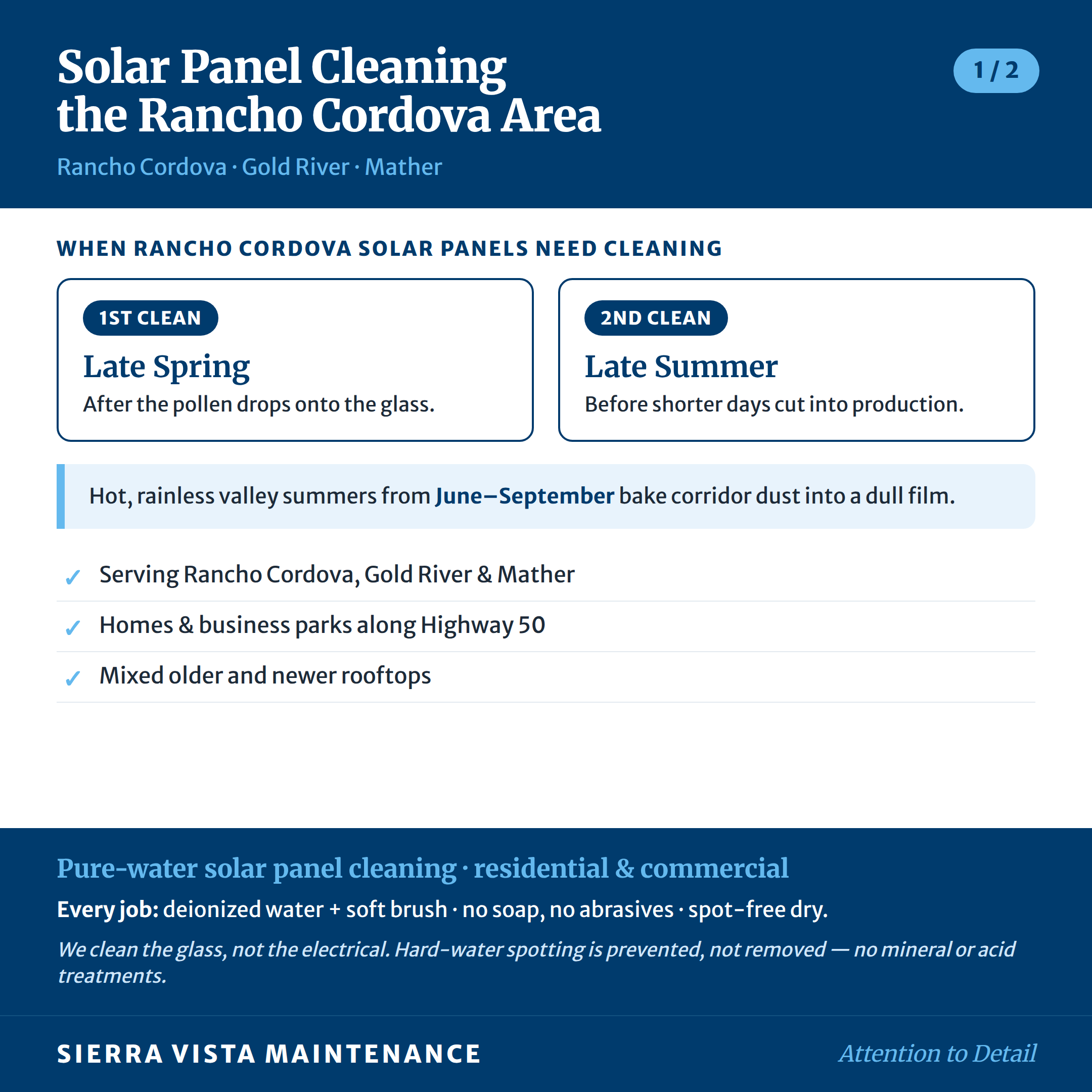
Most of our work here is residential. Our residential solar panel cleaning covers the rooftop arrays on homes across Rancho Cordova, Gold River, and Mather, where the corridor and hot summers do the most soiling. We time most cleanings for late spring, after the pollen drops, and again in late summer, so your panels head into the highest-production months clear.
We also clean commercial solar panel installations — the larger roof- and ground-mounted arrays on the business parks, office buildings, and industrial sites along the Highway 50 corridor and around Mather. The pure-water method is the same; the scale and roof access are what change.
We clean the glass; we don’t service the electrical side of your system. If we spot a cracked panel, a loose clamp, or wiring that looks off while we’re up there, we’ll tell you so you can get the right person out to look at it.

What Makes Solar Panel Cleaning in the Rancho Cordova Area Different
Rancho Cordova sits on the flat valley floor along Highway 50, and its summers run hot and dry. Well into the interior of the valley, the area gets only a modest evening cool-down, so dark rooftop panels heat up through the afternoon and stay warm.
That heat is what makes soiling stubborn. Dust and pollen that might blow off a cooler roof instead bake into a hard film on hot glass, and a plain rinse won’t lift it once it’s set. From June through September there’s essentially no rain to help, so a full season of soiling accumulates and hardens with nothing to clear it until the winter rains.
Damp mornings add a second step. When valley moisture settles over a layer of dry dust and the sun then bakes it, the result is a thin film that’s tougher than loose dust to remove — the kind that needs deionized water and a soft brush rather than a hose. Between the heat, the dryness, and that occasional baked film, the panels here rarely clean themselves, which is why a regular schedule does the real work.
Common Solar Panel Cleaning Issues We See in the Rancho Cordova Area
Corridor and road dust
Straddling Highway 50 and White Rock Road, Rancho Cordova arrays catch more road and vehicle dust than quieter pockets. It settles as a fine gray film that bakes onto hot glass and resists a hose rinse.
Baked-on summer soiling
Hot, rainless valley summers bake pollen and dust into a hard film by late summer. Lifting it without scratching the glass coating takes deionized water and a soft brush, not a quick spray.
Sprinkler overspray and hard-water spotting
Panels within reach of lawn sprinklers pick up mineral spotting when hard water dries on hot glass. This is best prevented, not removed: keeping spray off the panels and cleaning on a regular schedule stops the minerals from setting in. Spots left to bake on over several summers can etch the glass permanently.
Corridor Traffic Dust on Rancho Cordova Rooftops
Rancho Cordova is built around movement. Highway 50 runs straight through it, White Rock Road carries commuter and commercial traffic along its southern edge, and business parks and industrial sites keep trucks and cars moving all day. That constant traffic kicks up a fine, steady haze of road dust and vehicle grime.
Arrays near those corridors catch more of it than panels in a quiet cul-de-sac would. Road dust settles as a thin, greasy-fine film — not the loose dust that a breeze carries off, but a finer grime that clings to the glass and, on hot valley rooftops, bakes into a dull gray layer. It coats the whole array evenly, so it doesn’t look like much from the ground even as it trims output across every panel.
If your home or building sits near Highway 50, White Rock Road, or one of the busier arterials, your panels are working against that corridor grime all summer with no rain to rinse it. That’s the case for staying on a regular cleaning schedule here rather than waiting for the glass to look obviously dirty — by then the film has been quietly costing you production for months. A regular visit keeps that corridor grime from ever adding up.
How often should I clean my solar panels in the Rancho Cordova area?
Twice a year works well for most rooftops here — once in late spring after the pollen drops, and once in late summer. Hot, rainless valley summers give the panels nothing to rinse them from June through September, and if your home or building sits near Highway 50 or another busy corridor, the extra road dust can make a second look worthwhile.
Will hard water spots come off my panels?
Hard water spotting is best prevented, not removed. Fresh spotting from sprinkler overspray rinses off with regular service, but spots left to bake on over several summers can etch the glass and become permanent — and Sierra Vista Maintenance does not perform mineral or acid removal treatments. The fix is staying ahead of it: regular cleaning and keeping sprinkler spray off the panels keep the minerals from ever setting in.
Does being near Highway 50 affect my solar panels?
It can. Busy corridors kick up fine road dust and vehicle grime that settles as a thin film on nearby arrays. On hot glass it bakes into a dull layer that coats the whole array evenly, so it’s easy to miss from the ground while it trims your output.
Do you clean commercial solar arrays in the Rancho Cordova area?
Yes. Along with residential rooftops, we clean the larger roof- and ground-mounted arrays on business parks, office buildings, and industrial sites along the Highway 50 corridor and around Mather. The pure-water method is the same; we adjust for the scale and roof access of a commercial site.
Why do you use deionized water instead of just a garden hose?
Tap water here carries dissolved minerals. Spray it on hot panels and it dries into chalky spots that reflect light away from the cells and, left long enough, bake on for good. Deionized water has those minerals removed, so it rinses the glass clean and dries with no spots and no soapy film. A plain hose rinse can leave your panels worse off than before.
Request an Estimate
In most cases, we deliver same-day or next-day quotes after we speak with you on the phone or after you complete an estimate request online.