A pressure washer is not one tool with one setting, and treating it like one is how people etch their concrete, drive water behind their siding, and strip the finish off a deck. Every exterior cleaning job comes down to two questions: what is the surface, and what is actually making it dirty? In the Sacramento area, that second question has a specific local answer — and getting both right is the difference between a clean surface and an expensive repair.
This guide covers both halves: how to match the cleaning method to each surface around your home, and the Sacramento-specific reasons your house, patio, and driveway get dirty in the first place.
Pressure Washing vs. Soft Washing: The Decision That Prevents Damage
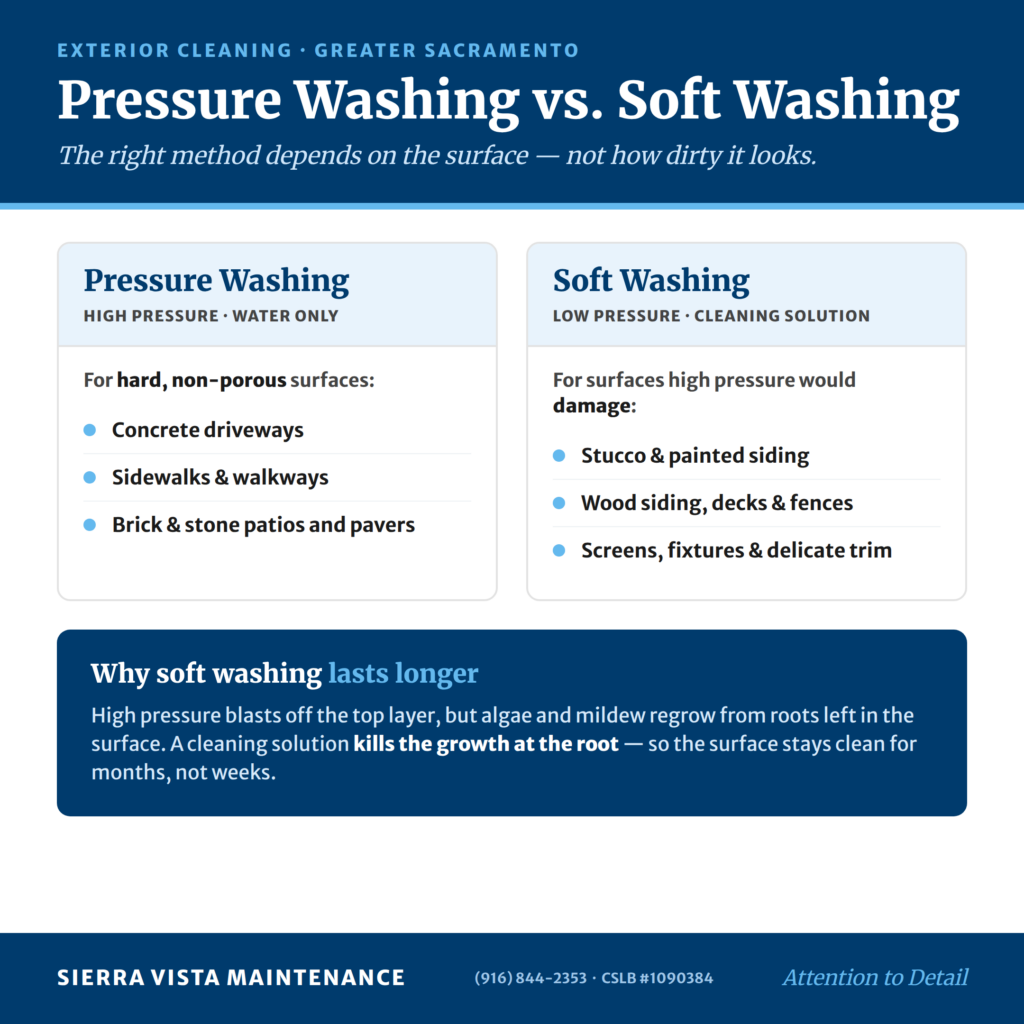
Pressure washing uses high-pressure water and is meant for hard, non-porous surfaces — concrete driveways, sidewalks, walkways, and most patios. Soft washing uses low pressure plus a cleaning solution that does the work chemically, and it’s for anything high pressure would damage: stucco, painted and wood siding, decks, fences, and delicate trim.
The costly mistake is treating the two as interchangeable. High pressure on stucco gouges it. On wood, it furs the grain. On siding, it forces water behind the boards where it feeds mold you can’t see. Meanwhile, soft washing an oil-stained concrete driveway barely touches it. The right method depends on the surface, its age, and its condition — and that single judgment is what protects your property.
- Concrete driveways, sidewalks, walkways — pressure washing
- Brick and stone patios and pavers — pressure washing, with adjusted technique
- Stucco, painted siding, wood siding — soft washing
- Wood decks and fences — soft washing or low pressure
- Screens, light fixtures, delicate trim — soft washing
Why Soft Washing Lasts Longer Than Blasting
Here’s the part most homeowners never get told: on anything living — algae, mildew, moss, the black streaks on a north-facing wall — how you remove it decides how fast it comes back.
High-pressure water removes the visible top layer. The surface looks clean the day it’s done. But organic growth has roots and spores that sit in the pores of the stucco, concrete, or wood, and water alone doesn’t kill them. Within a few weeks to a couple of months, the same streaks bloom back in the same spots, and it looks like the cleaning didn’t hold.
Soft washing works differently. The low pressure is almost beside the point — the work is done by the cleaning solution, which kills the growth at the root rather than just knocking off the top. The surface doesn’t just look clean; it stays clean noticeably longer, because what was feeding the stain is gone, not relocated. That’s the whole reason soft washing exists, and it’s why blasting a mildewed wall is usually the wrong tool even when it’s physically possible.
This is also why the “more pressure equals cleaner” instinct backfires. On a hard, non-living surface like a dust-darkened driveway, pressure is exactly right — there are no roots, just embedded grime, and force lifts it. But on a living stain on a delicate surface, more pressure gouges the material and leaves the actual problem behind to regrow. Matching the method to what you’re removing — not just how dirty it looks — is the difference between a clean that lasts a season and one that lasts a few weeks.
Why Sacramento Surfaces Get Dirty Faster Than You Think
The Sacramento Valley sits in a basin ringed by mountains. That geography traps airborne material — dust, pollen, and smoke settle and linger instead of blowing through. Your exterior surfaces are downwind of more grime, more of the year, than in most of the country. Three local layers do most of the work.
Pollen, February through November
Sacramento has one of the longest pollen seasons in the country — roughly ten months, in overlapping waves of tree, grass, and weed pollen that you can track locally. Oak pollen peaks hard in spring, and it’s the source of that neon-yellow film that coats windshields, patio furniture, and house exteriors every April. It’s the single most common thing homeowners ask us to wash off once the weather warms.
Dust and Wildfire Smoke
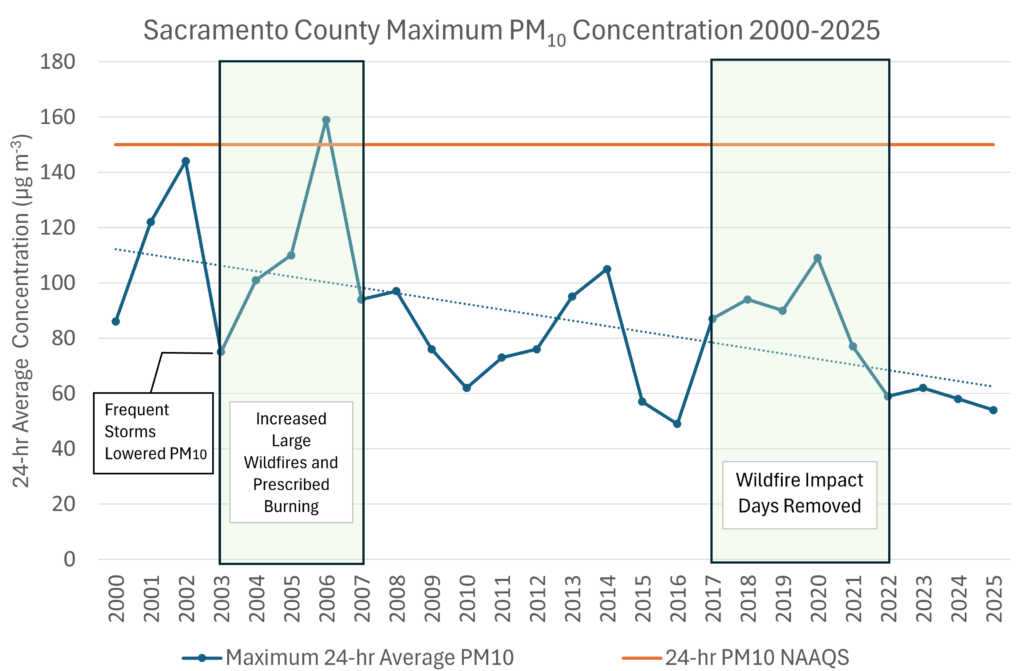
Summer and fall add two more layers. Agricultural harvest and dry winds push coarse dust across the valley, leaving a light-brown silt on patios and siding. Then there’s wildfire smoke, now a regular part of the Sacramento calendar according to the Sacramento Metropolitan Air Quality Management District, which deposits fine particulate and, in close-proximity fire years, visible ash. The federal annual health standard for that fine particulate (PM2.5) was tightened to 9.0 µg/m³ in 2024, and the valley sits near that line during stagnant winter stretches. On a wall, it reads as a gray haze that ordinary rain doesn’t rinse away.
The Water Story: Soft Foothills, Hard Valley
One more local factor shapes how surfaces — especially glass — look here: where your water comes from. The region splits sharply. Foothill communities like Folsom and El Dorado Hills draw soft Sierra-snowmelt surface water. Down on the valley floor, water comes largely from deep groundwater that has picked up calcium and magnesium along the way, which makes it hard. The Sacramento Suburban Water District notes that hard water is common across the Sacramento and Central Valleys, and a California American Water report for one valley system measured total hardness around 172 ppm — solidly hard — versus far softer purchased surface water.
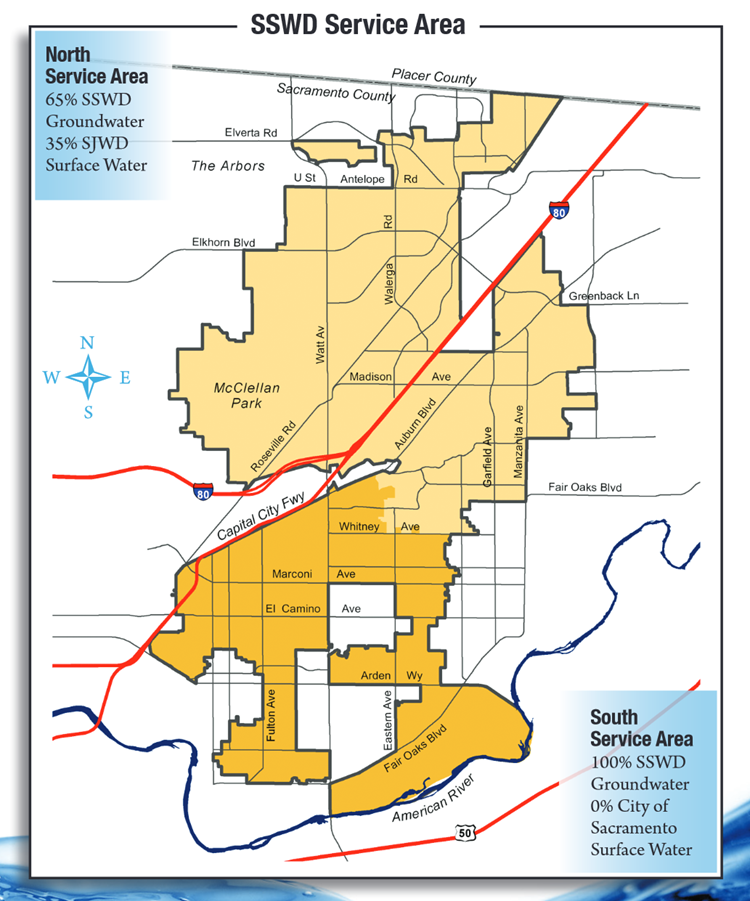
Here’s the honest part: this is mostly a glass-and-fixture issue, not a driveway one. Hard water leaves mineral spots on windows, shower doors, and solar panels — surfaces where droplets sit and evaporate. It is not what’s discoloring your concrete. If your windows spot quickly after a rinse, that’s a window cleaning conversation, not a pressure-washing one. Your patio’s staining is almost always organic growth and settled dust.
Surface by Surface: What Your Property Actually Needs
Concrete Driveways and Sidewalks
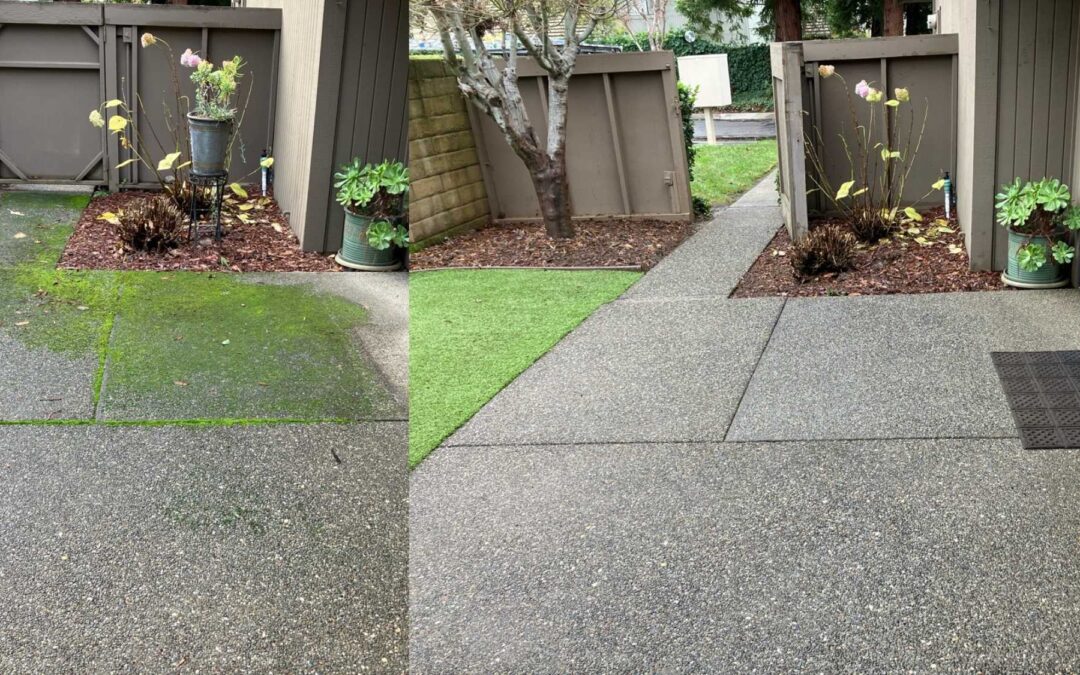
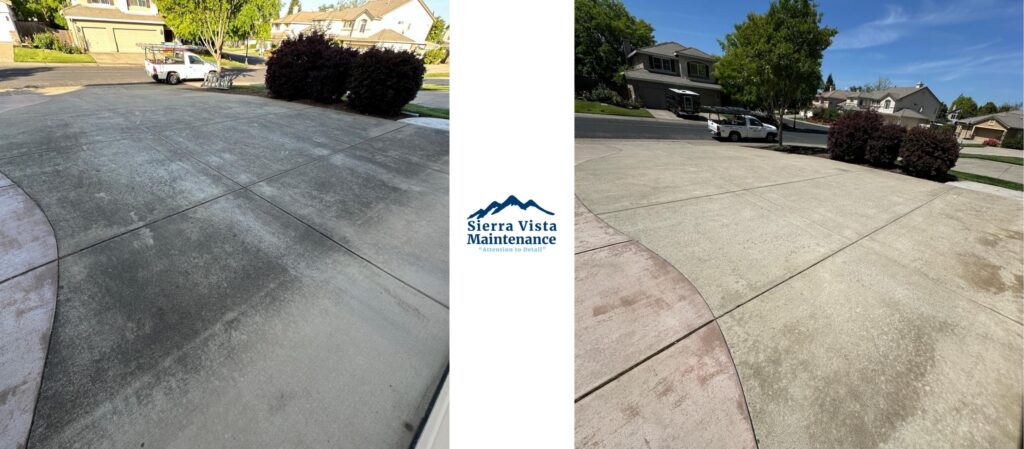
Concrete takes full pressure, and it’s both the surface we clean most often and the one most commonly ruined by DIY — a tight, lingering nozzle leaves permanent wand marks etched into the slab. Done correctly, pressure washing lifts embedded dust, algae, tire scuff, and the gray biofilm that builds up in shaded sections.
Oil stains are the honest exception. A fresh drip usually lifts with pre-treatment. A stain that has soaked in over several seasons may lighten substantially but not disappear — concrete is porous, and oil migrates below the surface where no amount of pressure reaches. We pre-treat, we lighten what we can, and we tell you honestly what a given stain will and won’t do before we start. Learn more about our driveway cleaning service.
Patios, Pavers, and Walkways
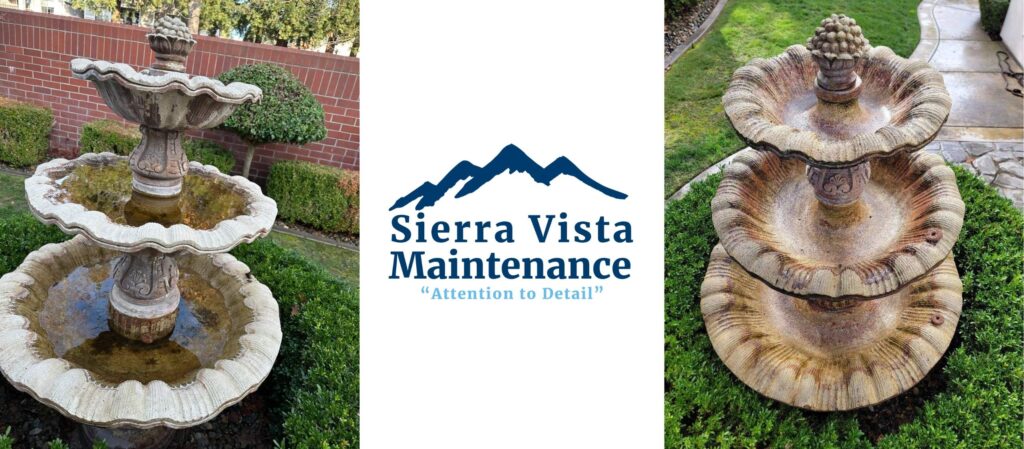
Patios collect the same pollen and dust as everything else, plus organic growth in the joints and grout. Pavers and natural stone need adjusted pressure and technique so the cleaning doesn’t blast out joint sand or pit softer stone. The most common patio mistake is over-powering a delicate surface to save a few minutes. Learn more about our patio cleaning service.
House Exteriors, Stucco, and Siding
This is where method matters most. Stucco, painted siding, and wood get soft washing — low pressure plus a cleaning solution that does the work chemically instead of by force. It’s the only safe way to clear the gray pollution haze, pollen film, and mildew off a wall without driving water behind it or etching the surface. Learn more about our house washing service.
Wood Decks and Fences
Wood is the surface most often wrecked by a rented machine. High pressure furs the grain, gouges soft spots, and strips finish. Decks and fences get low pressure or soft washing instead. We clean wood; we don’t refinish it — if the boards need re-staining, that’s a separate job, and we’ll flag it.
What That Stain Actually Is
Most people can see that a surface is dirty but can’t name what they’re looking at — and the name matters, because it decides whether a wash removes it, lightens it, or can’t touch it. Here’s how to read the most common marks on Sacramento-area concrete, pavers, and siding.
| What you see | What it actually is (and why it’s here) | What a wash does |
|---|---|---|
| Black or dark streaks, often on north-facing walls and shaded concrete | Algae and mildew — organic growth that thrives in the shade and moisture common on tree-covered foothill lots | Lifts well. Soft washing kills it at the root so it doesn’t grow back in weeks the way a plain rinse lets it. |
| Green, fuzzy patches | Moss and algae, in the dampest, shadiest spots — north sides, under eaves, beneath tree canopy | Removes cleanly, but it returns if the underlying shade-and-moisture condition isn’t addressed between cleanings. |
| Gray darkening along driveway tire paths and walkways | Biofilm plus embedded valley dust and tire residue, built up in the areas that get the most use | Lifts with proper pressure — this is the classic “my concrete is two different colors” fix. |
| Orange or rust-brown spots and streaks | Rust from sprinkler overspray, metal furniture, or fertilizer — or tannins leached from oak leaves and acorns, which Sacramento has in abundance | Often lightens substantially, but set-in rust and tannin are not guaranteed to come out fully. We pre-treat and give you an honest read before we start. |
| Dark, soaked-in patches on the driveway | Motor oil that has absorbed into porous concrete | Fresh oil usually lifts with pre-treatment. Oil that’s soaked in over seasons may lighten but not disappear — it has migrated below the surface where pressure can’t reach. |
| White, chalky crust or film on concrete or pavers | Efflorescence — mineral salts migrating out of the slab itself as it dries. This is not dirt, and it’s not from your water supply. | The surface deposit washes off, but it can recur, because it’s driven by moisture moving through the concrete. It’s a condition to manage, not a stain to “beat.” |
| A yellow-green dusty film coating everything in spring | Pollen — chiefly oak, during Sacramento’s long spring wave | Rinses and washes off easily; it’s the most cooperative thing on this list. |
The honest throughline: organic growth and pollen come off reliably, embedded grime lifts with the right pressure, and the mineral-and-petroleum marks — rust, tannin, old oil, efflorescence — lighten rather than vanish. The only way to know which category yours falls into is to look at it in person, which is exactly what the estimate is for.
DIY vs. Hiring a Pro: Where a Rented Machine Goes Wrong
A rented pressure washer is cheap. The damage it can cause is not. The DIY failures we most often get called to fix: wand marks etched into concrete, water forced behind siding, stripped deck wood, and cracked window seals. A pressure washer also delivers a lot of force at close range, and injuries from kickback and lacerations are common enough that proper technique and safety gear are part of the job, not an afterthought.
The honest math: renting a machine saves less than people expect once you add the rental, the cleaning solutions, and the time — and it carries real risk of a repair bill that dwarfs the cost of the wash. The value of a professional isn’t the equipment; it’s knowing which surface gets which method.
What Pressure Washing Costs in the Sacramento Area
Pricing varies widely, and any honest answer is a range, not a number. Across the U.S., professional pressure washing generally runs somewhere between $0.10 and $0.55 per square foot. Whole-house washes commonly land anywhere from roughly $150 to $700 or more, and driveways from about $100 to $500, depending on size and condition.
What moves a price within those ranges: the surface (flat concrete is cheaper per foot than detailed trim or multi-story siding), the square footage, the condition (a lightly dusty driveway is a fraction of the cost of one with set-in oil and heavy growth), and access (stairs, slopes, and second stories add time). Soft-wash jobs can run longer because the solution needs dwell time. Bundling several surfaces into one visit usually lowers the per-surface cost.
Those figures are national averages, not a quote — and we won’t pretend to price your property from a web page. The only accurate number comes from looking at your actual surfaces.
The Sacramento Exterior-Cleaning Calendar
Because the grime here arrives in waves, the smartest approach is a rhythm rather than a one-time blast.
- Spring (February–June): oak pollen peaks — the right window to wash the yellow film off siding, windows, and patios.
- Summer (June–September): agricultural dust settles as patios and driveways see their heaviest use.
- Fall (September–November): wildfire smoke and ash overlap with weed pollen — a good time to reset surfaces and clear gutters before winter.
- Winter (November–February): stagnant air and wood smoke leave a fine haze, and the first rains reveal what’s stained versus what simply rinses off.
Pressure washing pairs naturally with the rest of an exterior routine — gutters, windows, and roof cleaning — since the same pollen and dust coating your patio are filling your gutters and dulling your glass.
What We Will and Won’t Do
Sierra Vista Maintenance cleans concrete, pavers, wood, and other exterior surfaces using pressure washing and soft-washing techniques. We do not repair, reseal, restain, or replace the surfaces we clean. If your concrete is spalled, your pavers are heaving, or your deck wood needs refinishing, we’ll tell you on the estimate so you can address the underlying issue with the right contractor.

How to Prepare for Your Pressure Washing Service
A little prep before we arrive makes the job faster, safer, and more thorough — and it protects your belongings. None of this is required, and we’ll work around whatever you don’t get to, but here’s what helps most.
The day before:
- Move vehicles, motorcycles, and trailers off the driveway and away from areas being cleaned, so the surface is fully accessible and nothing gets overspray.
- Relocate patio furniture, grills, planters, door mats, and decorative items off the patios, decks, and walkways we’ll be washing. Anything left in place we’ll clean around, which can leave untouched spots.
- Trim back or tie up any overgrown shrubs, vines, or low branches against the walls or fences being cleaned.
The morning of:
- Close all windows and exterior doors fully, and check that any windows with a history of leaking are latched. Soft washing a house exterior puts water and solution against the walls.
- Bring pets indoors, and keep them in for the duration — the equipment is loud and the cleaning solutions shouldn’t be walked through.
- Move children’s toys, pet bowls, and anything else low to the ground out of the work zones.
- Disconnect and store anything electrical in the area — string lights, landscape lighting you can unplug, electric grills, fountain pumps.
Point us to:
- An accessible outdoor water spigot. We supply the equipment; we connect to your home’s water source, so we’ll need to know where the working spigot is.
- Any stains or problem spots you want us to look at specifically. If there’s an oil stain, a rust mark, or a section you’ve been frustrated with, show us — it helps us set honest expectations before we begin.
- Any surface you’re unsure about or don’t want touched (a delicate finish, a freshly painted area, a covered vent).
That’s it. If you can’t get to some of this, just let us know what’s left and we’ll handle it on site.
Frequently Asked Questions
Should my house be pressure washed or soft washed?
Almost always soft washed. Stucco, painted siding, and wood can be damaged by high pressure. Hard, flat surfaces like concrete driveways and sidewalks take pressure washing; walls and wood get the gentler soft-wash method.
Can you get oil stains out of my driveway?
It depends on how long the stain has been there. Fresh oil usually lifts with pre-treatment. Oil that has soaked in over several seasons may lighten significantly but not come out completely, because concrete is porous. We’ll pre-treat, lighten what we can, and tell you honestly what to expect before we start.
How often should I have my surfaces cleaned?
For most Sacramento-area homes, once a year handles the pollen, dust, and growth. Patios and driveways sometimes warrant a mid-season refresh, given how much material settles here.
Will pressure washing remove hard water spots from my windows?
That’s a different service. Hard water spotting on glass and solar panels is mineral, not surface grime, and needs a window or panel treatment rather than pressure washing. Long-neglected spots can etch the glass and may require a dedicated mineral-removal treatment.
Do I need to be home for the service?
For most exterior work, no — as long as we have access to the areas being cleaned and to a water source. We’ll confirm the specifics when you book.
Get an Honest Read on Your Surfaces
Every property is different, and the right method — and the right price — depends on what you actually have. Request a free estimate and we’ll give you a straight read on what your surfaces need, what they don’t, and what to expect, usually with a same-day or next-day quote. See our pressure washing services.


